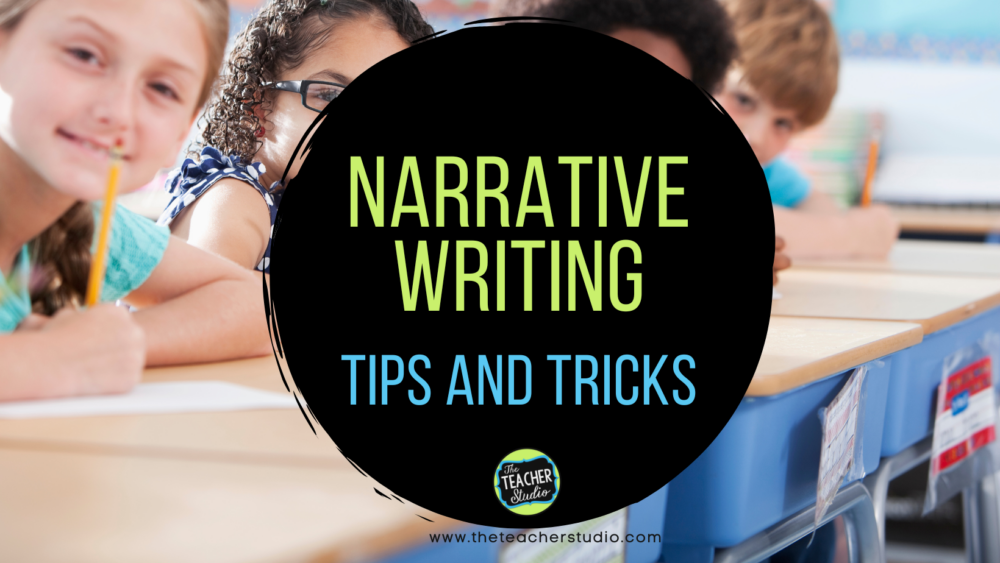
Teaching narrative writing was always one of my favorite parts of the year. It was also one of the hardest. Writing a whole story from beginning to end is a big ask for a nine- or ten-year-old, and it can feel overwhelming for them and for us. That being said, elementary students LOVE to tell and write stories!
After 33 years in the classroom, I learned that narrative writing gets easier when we break it into small, concrete steps and write right alongside our students. Here is what narrative writing is, the six steps I used with my upper elementary writers, and a list of story ideas to get your class started. I hope this helps you have some fun with narrative writing!
What Is Narrative Writing?
Narrative writing is writing that tells a story. It has characters, a setting, and a series of events with a problem and a resolution, told in an order that makes sense to the reader. A narrative can be true, like a personal narrative about a time you got lost, or made up, like realistic fiction or historical fiction. Often, students get a ton of experience in primary grades writing personal narratives but may not have a great understanding of “story”.
In grades 3-5, a strong narrative usually includes:
- Characters the reader gets to know through their actions, words, and thoughts
- A setting that grounds the story in a time and place
- A clear sequence of events with a beginning, middle, and end
- A problem or conflict that the character works through
- Details that help the reader picture what is happening, including sensory details and feelings
- Dialogue that moves the story forward or shows something about a character
- A lead that hooks the reader and an ending that feels finished
In upper elementary, students often write personal narratives, realistic fiction, and historical fiction. One of my favorite twists was having students retell a scene from a book we were reading from a different character’s point of view. The plot was already there, so they could focus on the craft.
How to Teach Narrative Writing: 6 Steps That Worked in My Classroom
1. Start by telling a story out loud
Before students wrote a word, I told them a story. One year it was the afternoon I came home to find my front door standing wide open, and I had to drive to Burger King to call the police (this was before cell phones). The kids were hooked.
Then we mapped my story together on the easel. Telling first takes the pressure off. Students learn that a story is something you can say before it is something you have to write. After my turn, they told their own stories to a partner before planning. In fact, stressing the oral language piece is so critical, during planning, drafting, AND revising and editing.
2. Read like a writer: study how authors build characters
I always tried to weave reading and writing together. During our narrative unit, we studied the characters in our read aloud, Fish in a Tree, along with a few picture books. We tracked what the author told us about each character on the outside and the inside.
My students noticed something on their own: authors spend very little time describing what characters look like. Most of what we learn is hinted at through actions, words, and choices. That one discovery changed how they built their own characters. We created a character together under the document camera first, and then students created their own. This is the perfect tie to lessons on inferring.
3. Plan in scenes, not just events
I liked calling the parts of a story “scenes” instead of events. Students already know how TV shows and movies move from scene to scene, so they can picture it. I even asked them to think about when an episode might go to commercial, and how they keep people coming back to finish the show. Of course, with increased streaming, some students don’t have as much experience with those “scenes” broken up by commercials!
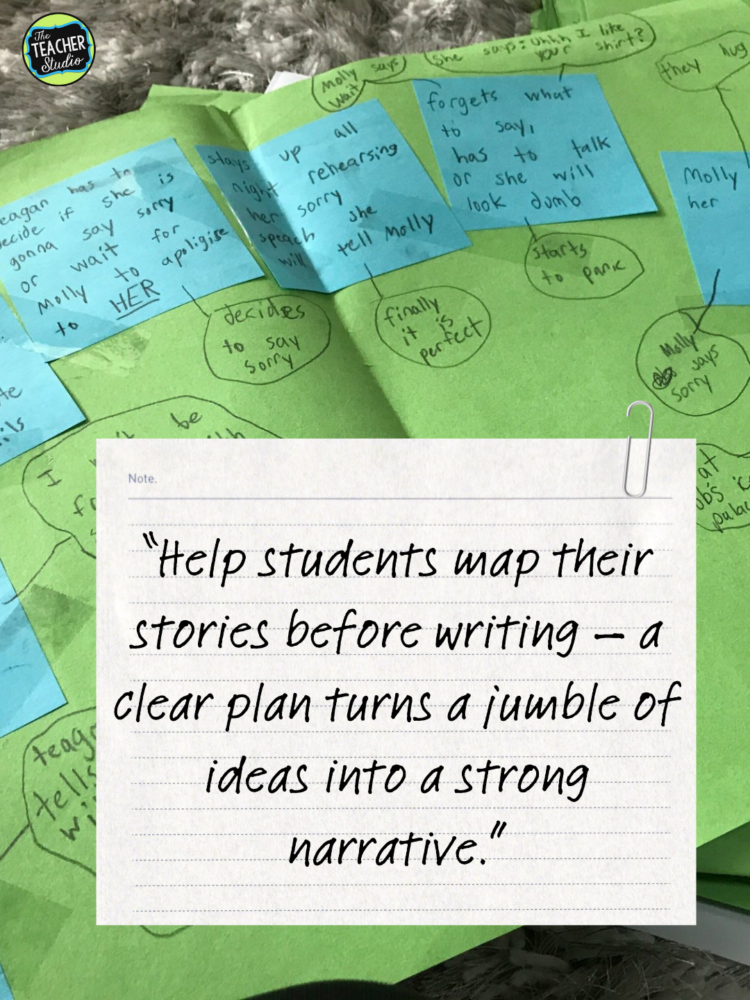
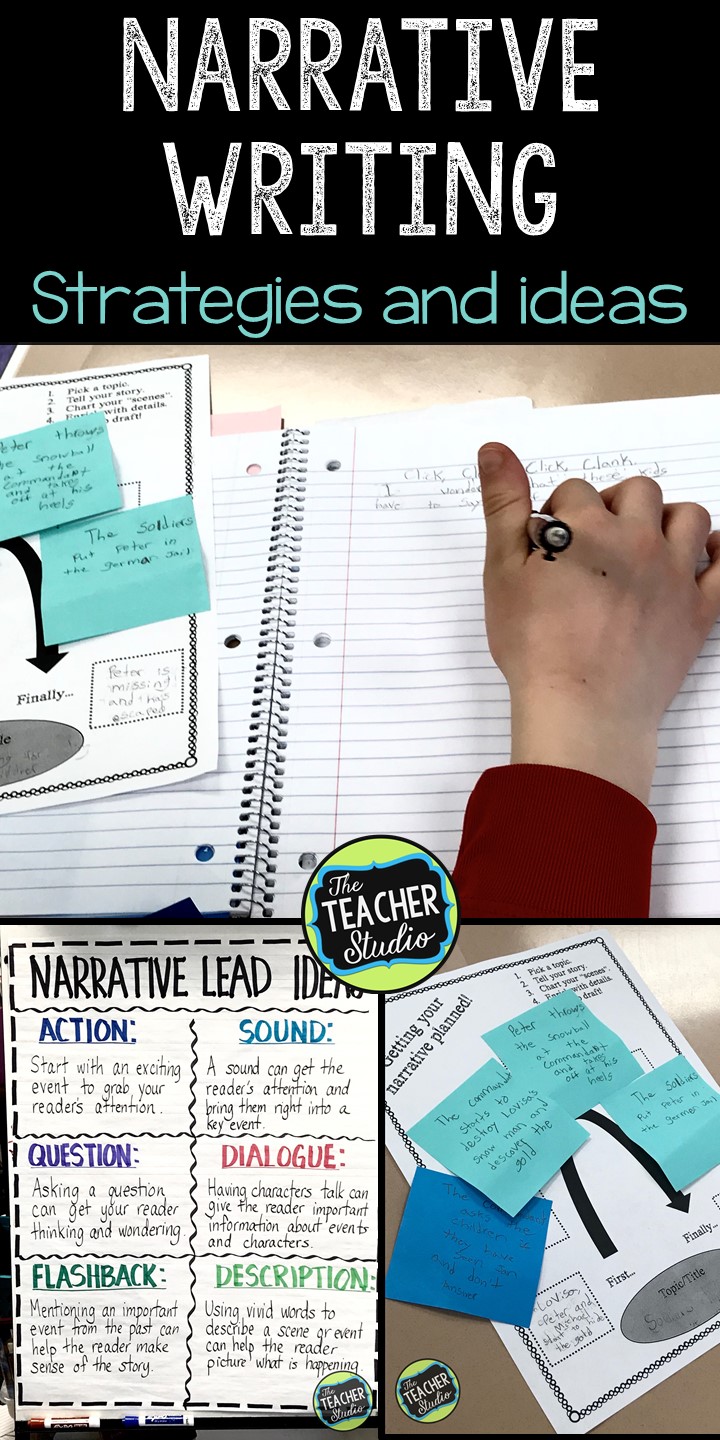
When we planned, we used a simple set of boxes and arrows to show the sequence, then went back and added the details each scene needed: who, where, what happened, and how the character felt. Sticky notes worked beautifully here. Students wrote one “micro” event on each note, which made it easy to rearrange, add, or cut scenes before drafting.
4. Teach leads that hook the reader
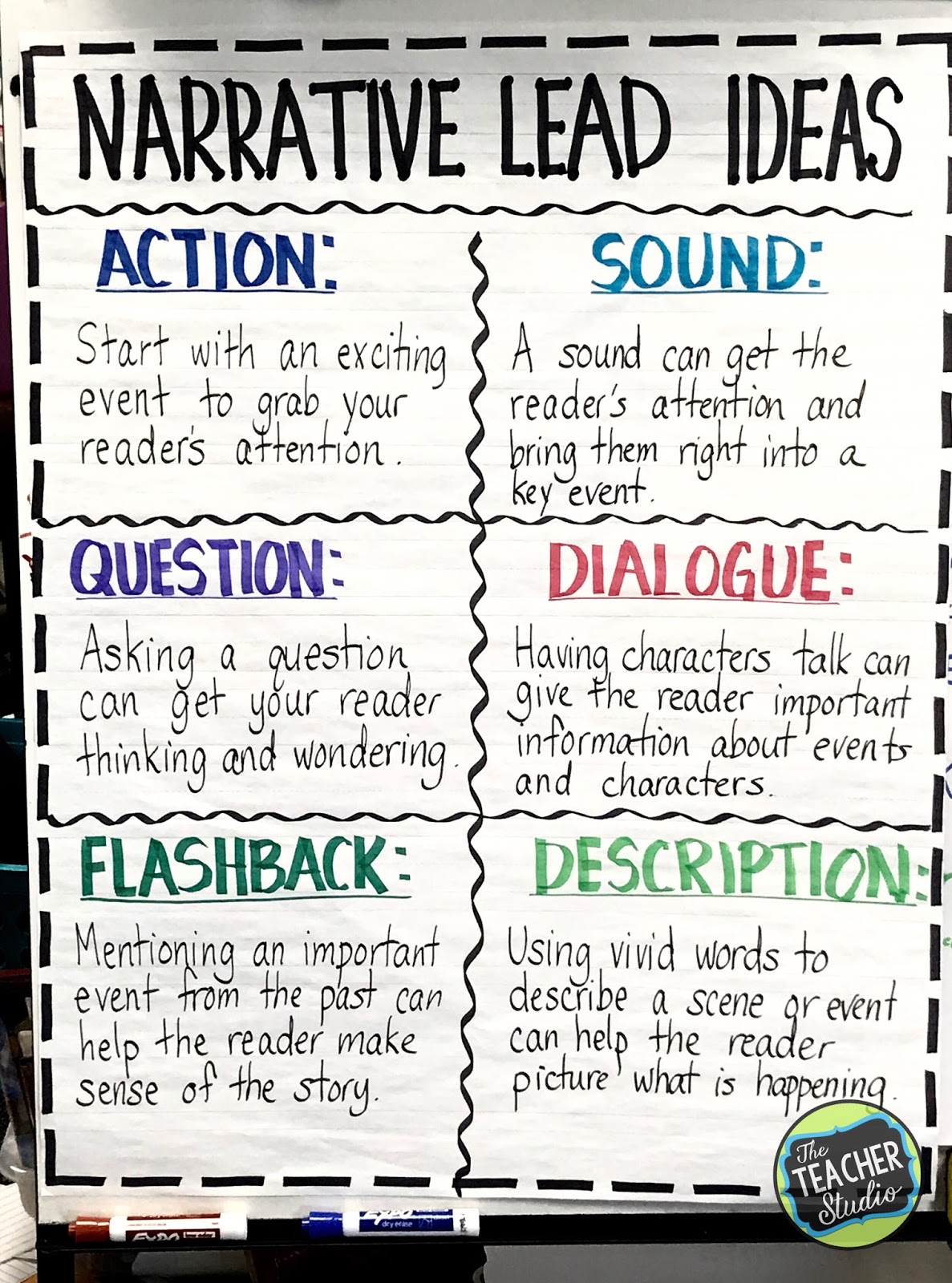
We studied the first lines of chapters in our read aloud and noticed that each chapter had its own mini lead…and that each chapter is like its own story. Then we made an anchor chart of ways to start a story, like opening with dialogue, an action, a question, or a sound. Students tried several leads for their own story and picked their favorite. Giving them permission to experiment made a big difference.
5. Teach dialogue with a purpose
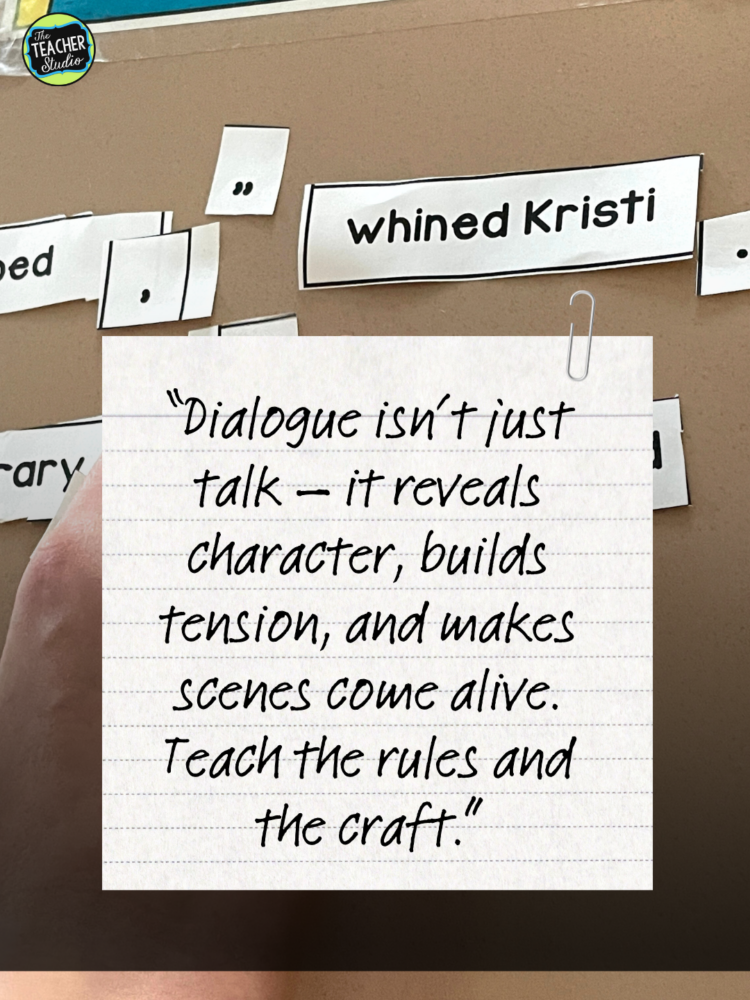
Students love dialogue, sometimes too much. I had them hunt for dialogue tags in their independent reading books, write them on sticky notes, and share. We talked about how “mumbled” feels different from “shouted,” and what it tells us when a character “demands” something.
Then we practiced punctuating dialogue with my hands-on dialogue lesson, because there is a lot to remember. The big idea I kept coming back to: every line of dialogue should have a reason to be there. It should move the story forward or show us something about a character.
6. Revise with color coding
When some students struggled to expand the scenes on their plan, I pulled a small group and tried one of my favorite revision strategies. Each student gave every box on their plan a color, then shaded the sentences in their draft that matched.
It was instantly visual. Students could see which scenes were well developed, which were one sentence long, and which were out of order. Everyone left the group with a clear plan for revision. This strategy works for opinion writing and book reviews too.
The thread through all six steps is modeling. I wrote my own narrative as my students wrote theirs, step by step. Writing with them took the pressure off, got every student involved, and let even my most reluctant writers be active participants. It was so fun to get their input on ideas for my story. I would take their suggestions, we would vote on ideas, and it truly became “our” story.
In addition, I asked for their suggestions with revision too. I MAY have accidentally written some parts poorly so they could help improve them!
Narrative Writing Ideas for Upper Elementary
The best stories come from what students know. I always told my writers that authors write about what they are experts in. Before drafting, we brainstormed lists of “fun times,” “scary times,” “favorite things,” and “times with friends and family.” Here are some story starters that work well in grades 3-5:
Personal narrative ideas
- A time you were really scared, and what happened next
- The first time you tried something new (a sport, a food, a ride)
- A time you got lost or something went wrong on a trip
- A day you will never forget with a friend or family member
- A time you were proud of yourself
Realistic fiction ideas
- A character finds something that doesn’t belong to them
- Two friends want the same thing and only one can have it
- A new student arrives and nothing goes as planned
- A character has to keep a secret, and it gets harder every day
- A pet goes missing the day before something important
Historical fiction ideas
- Retell a key scene from a book you are reading through another character’s eyes (my favorite!)
- Write a diary entry as someone living through a moment in history
- Think about a situation or story you know and try to morph it into a different era
Common Narrative Writing Struggles (and What Helps)
| What you see | What helps |
|---|---|
| A “bed to bed” story that lists everything that happened all day | Zoom in on one small moment. Plan three to five scenes on sticky notes and cut the rest. |
| The story just stops, with no real ending | Plan the ending before drafting. Ask, “How has your character changed or what did they learn?” |
| Pages of dialogue and nothing else | Ask, “Why is this line here?” Keep dialogue that moves the story or shows character. |
| Flat characters | Go back to the mentor text. How did the author show us who this person is without telling us? |
| Some scenes get one sentence, others get a page | Color-code the draft against the plan to see which scenes need more. |
| A blank page and a frozen writer | Tell the story out loud to a partner first, then plan, then write. |
Resources to Teach Narrative Writing
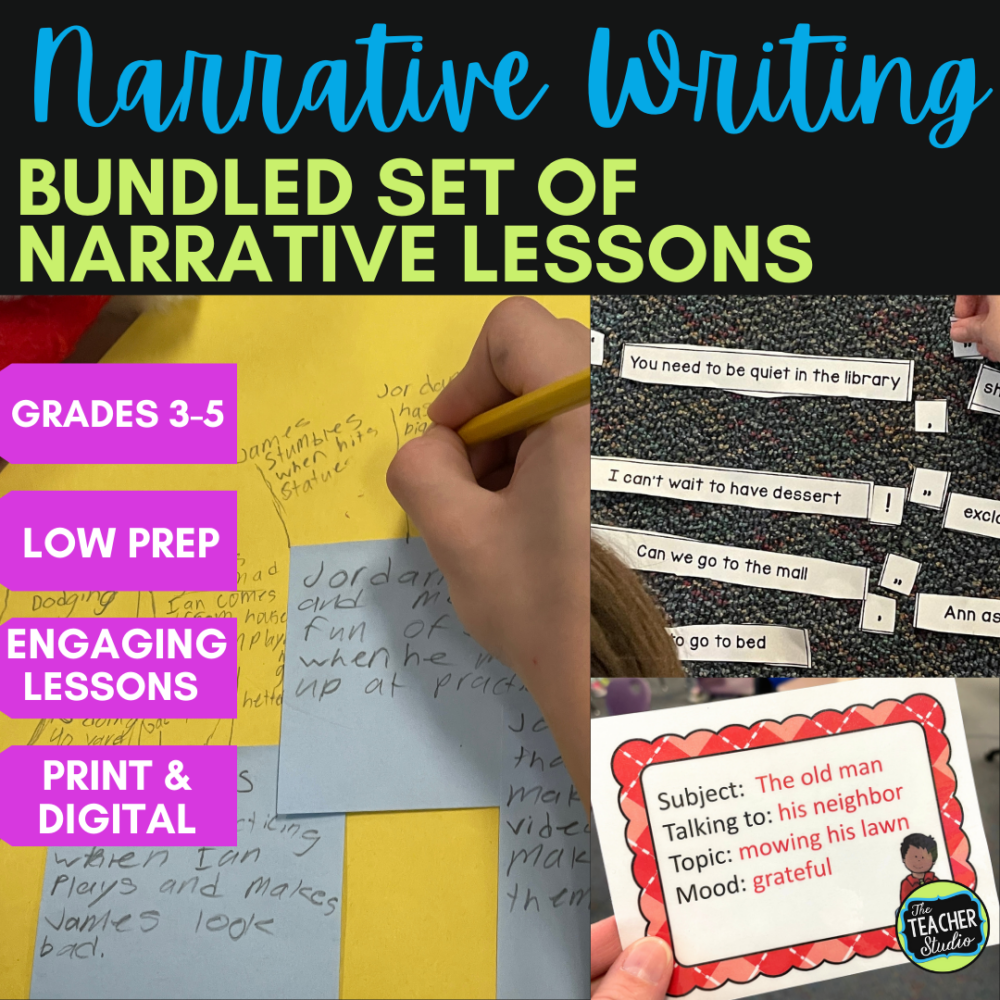
If you want the planning tools and lessons I used to teach these steps, you will find them in my Narrative Writing Toolkit. For hands-on dialogue practice with sentence strips, take a look at Punctuating Dialogue.
Want to dig deeper into a single step? These posts walk through it:
- Planning Narrative Writing: Lessons for Grades 3-5
- Narrative Writing Lessons: Characters, Story Maps, and Dialogue
- Teaching Dialogue: Why It Matters and How to Practice It
- Writing Historical Fiction Diary Entries
Happy writing! I would love to hear what stories your students come up with.
Do you follow me on social media yet? I'd love to connect there!
Facebook
TikTok
Instagram
Youtube
Or sign up for my email list RIGHT HERE for freebies, teaching tips, and more!