STEM Engineering activities, inquiry, and cooperative group work

STEM Engineering activities in elementary school?  Yes!

I wanted my students to apply some of the concepts we had been exploring — particularly around helping each other and being receptive to help. So I designed a quick STEM engineering challenge that would require them to work within a tight time frame, come up with a plan, try it out, test their idea, and reflect on the process — all while depending on each other to make it work.

As our district is moving toward the Next Generation Science Standards, this is a perfect “kick off”.  What engineering standards am I looking at?
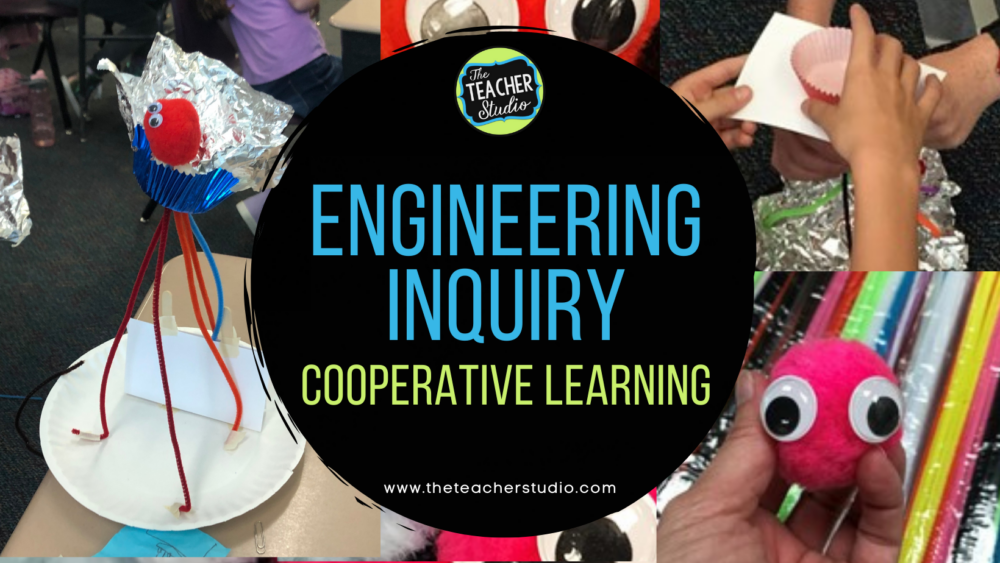
Using Engineering Inquiry in the Elementary Classroom: A Blog Post

What engineering design challenge did we tackle?

I wanted to create a task that was easy to prep, engaging for students, and had a high success rate.

I think I accomplished it!

What is the situation?

Help Harry.
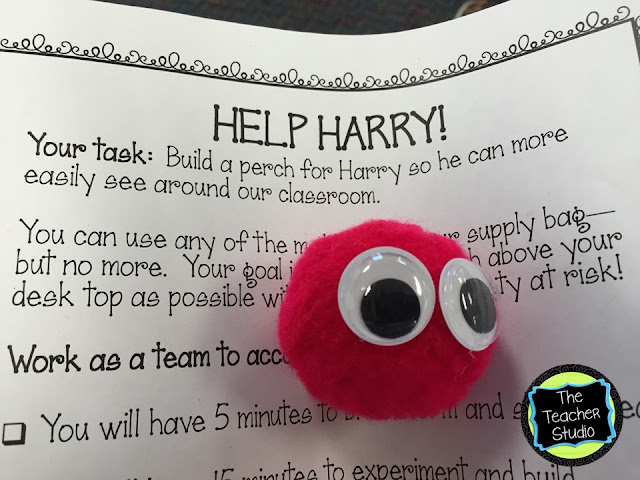
When I first told my students that we needed to help Harry, they looked at me like I was crazy.  (They will soon see that this is not an atypical situation in my room!)  They started looking around quizzically and you could feel the excitement building.  Finally, I caved.  I introduced them to Harry.
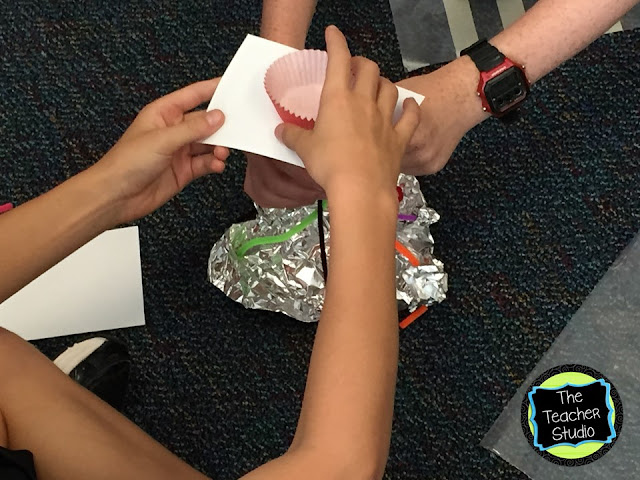
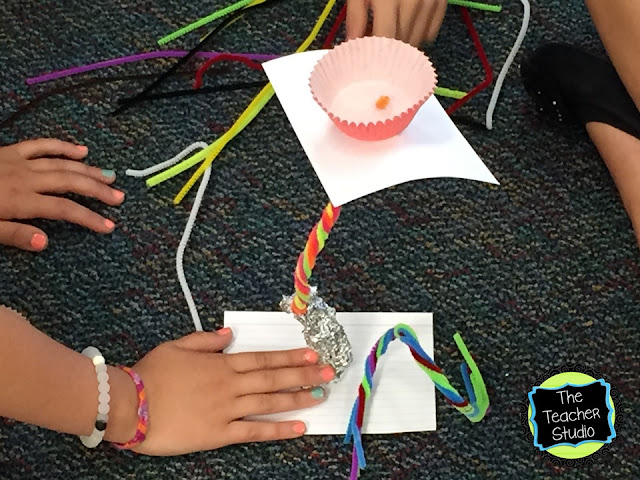
Harry is a puffball (We have had 7 of them perched above our Smartboard and no one has said a word!) who needs a new “perch” so that he can see out over the class more safely.  I told the students that I would give each team a bag of supplies and a schedule.  I showed them their supplies (pipe cleaners, about 12 inches of tape, two muffin liners, a piece of aluminum foil, and two index cards) and told them to think about a nice safe place for Harry to hang out.
Teaching engineering concepts is a key part of the Next Generation Science Standards (NGSS). This blog post has a freebie activity to help teach students how to work in collaborative teams, how to design a solution to a problem, revise, and retest! Great low-prep science activity.
 After 5 minutes of talking and planning without supplies, I set the timer for 15 minutes and watched the teams get to work.

Exploring materials in a STEM challenge Cooperative learning with STEM activities

 I was SHOCKED at the wide range of strategies–and how much “re-engineering” took place so willingly!  We will talk more about that tomorrow.  We will discuss how important it is to try, test, revise, and test again.  This is important whether it is in science, making predictions in reading, or elsewhere!
Teaching engineering concepts is a key part of the Next Generation Science Standards (NGSS). This blog post has a freebie activity to help teach students how to work in collaborative teams, how to design a solution to a problem, revise, and retest! Great low-prep science activity.
 This group was SO excited about their plan and couldn’t wait to see if Harry would be safe in his perch!  (He was…so no worries)
Using our STEM Engineering Activities to push our thinking and teamwork!
 I loved hearing the cheers echo across the room when the 15 minutes was over and I passed out the “Harries” to each team.  Every single team was able to test, modify, and support a Harry!  Teaching engineering concepts is a key part of the Next Generation Science Standards (NGSS). This blog post has a freebie activity to help teach students how to work in collaborative teams, how to design a solution to a problem, revise, and retest! Great low-prep science activity.

Time to Evaluate our Engineering Challenges!

When the testing and celebrating were done, we took time as teams to evaluate how we did across all the areas we had discussed before starting. I was genuinely pleased by how honest students were with themselves and each other.

This kind of structured reflection is worth doing any time — not just at the start of the year. It’s a natural way to show students that pausing to think about both their learning and their teamwork is just as valuable as the work itself.

Self-assessing our engineering activities

It was a genuinely fun half-hour — discussion-rich, collaborative, and packed with real science thinking. Take a look and see what you think.

Directions for STEM activity Find the pom poms and other supplies here on Amazon

If you want to try it, grab the freebie and tweak the supply bag to match whatever you have on hand. This time I used a pom pom (click HERE to find them on Amazon) piece of foil, about 12 pipe cleaners, 12 inches of masking tape, two cupcake liners, two index cards, and a popsicle stick — but paper clips, yarn, a small paper cup, or a paper plate work just as well. The task is completely flexible. Use what you have.

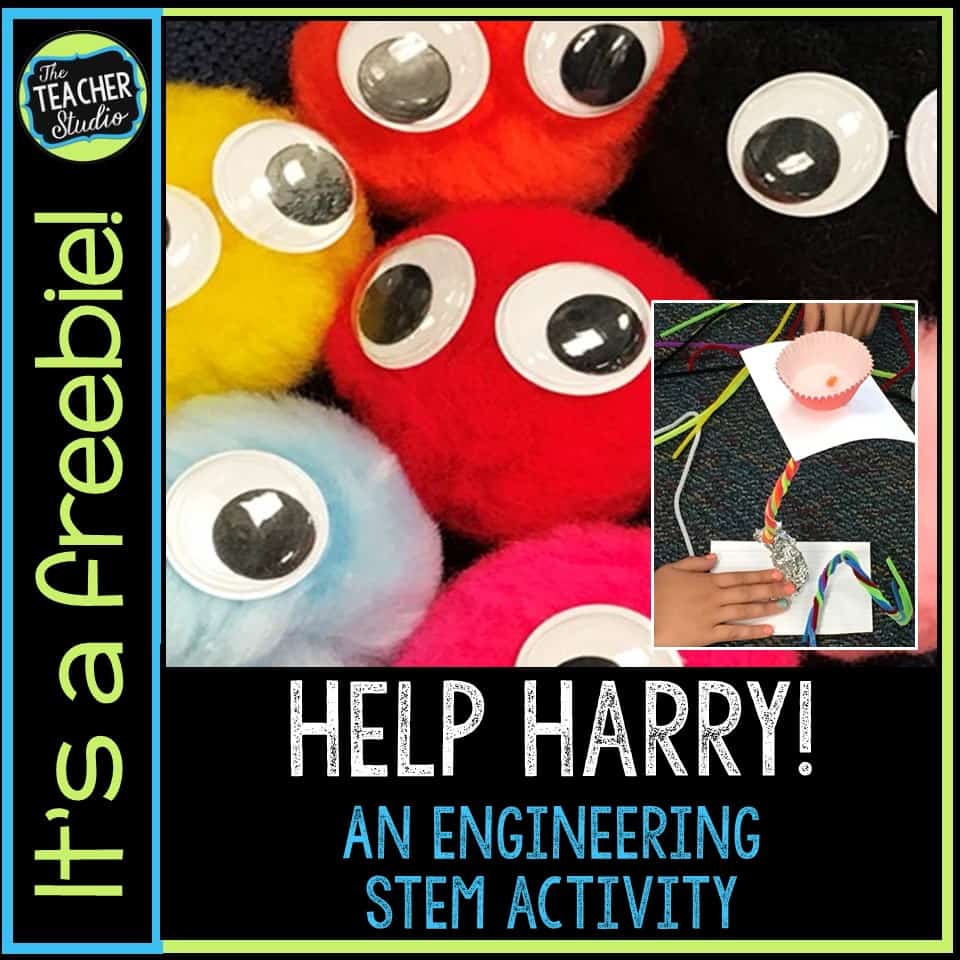
Want to try it yourself?  Just click the image below or RIGHT HERE to get the freebie handout pictured above.

Want this STEM FREEBIE with all the details?
Free STEM activity for elementary students

Want to see a few more STEM engineering activities?  Try these!
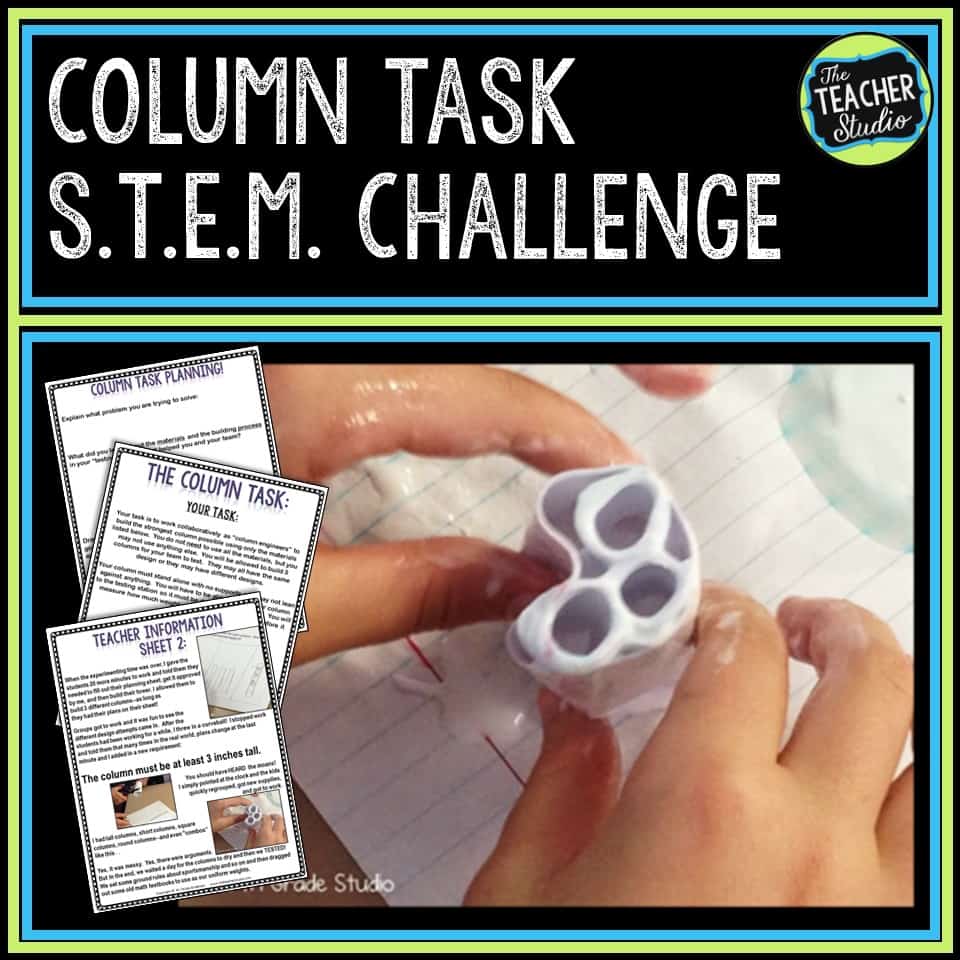
Low Prep Elementary Engineering STEM Activity elementary low prep engineering challenge

Interested in a few more science posts?

CLICK HERE to read about using technology to do scientific drawings!
CLICK HERE to read about using a science sort to teach states of matter!

Do you follow me on social media yet?  I’d love to connect there!

Or sign up for my email list RIGHT HERE for freebies, teaching tips, and more!
Want to pin this for later?
Teaching engineering concepts is a key part of the Next Generation Science Standards (NGSS). This blog post has a freebie activity to help teach students how to work in collaborative teams, how to design a solution to a problem, revise, and retest! Great low-prep science activity.

Meg