Flutter was one of those read-alouds my students loved year after year. While we read it, we spent a lot of time on one tricky reading skill: the difference between a summary and a retelling. When we finished the book, I challenged my students to put that practice to work and write a short summary of the entire story.
Summary vs. Retelling: Why It Matters
A retelling walks someone through what happened, usually in order and with lots of details. A summary is the short version. The writer has to decide which events matter most and leave the rest out. That decision is the hard part for upper elementary students, and a finished read-aloud everyone knows well is a perfect place to practice it.
Want a full lesson on this skill? I shared how I moved from modeling to partner practice to independent writing in Writing Summaries: A Gradual Release Lesson.
How We Wrote Our Flutter Summaries
By the time we finished Flutter, my students had been practicing summary vs. retelling for weeks. Most of them could tell me the difference. Actually doing it in their own writing? That was the real test. So I broke the work into a few steps.
Step 1: Find the “heart” of the book together
Before anyone wrote a word, students met in groups to talk about what the story was REALLY about. Not every event. Just the big idea and the moments that mattered most.
This conversation is where the thinking happened. When a group has to agree on what belongs in a summary, students have to explain WHY an event matters, and that is exactly the thinking a good summary needs. If a group gets stuck listing everything, one question can help: “If we left this part out, would a reader still understand the story?”
Step 2: Write it independently
After all that talk, each student wrote their own summary of the whole book in a Google Doc. The group conversation gave everyone a starting point, but the writing had to be their own. Reading those drafts showed me pretty quickly who truly understood the difference between summarizing and retelling, and who still needed a little more support.
Step 3: Print, display, and celebrate
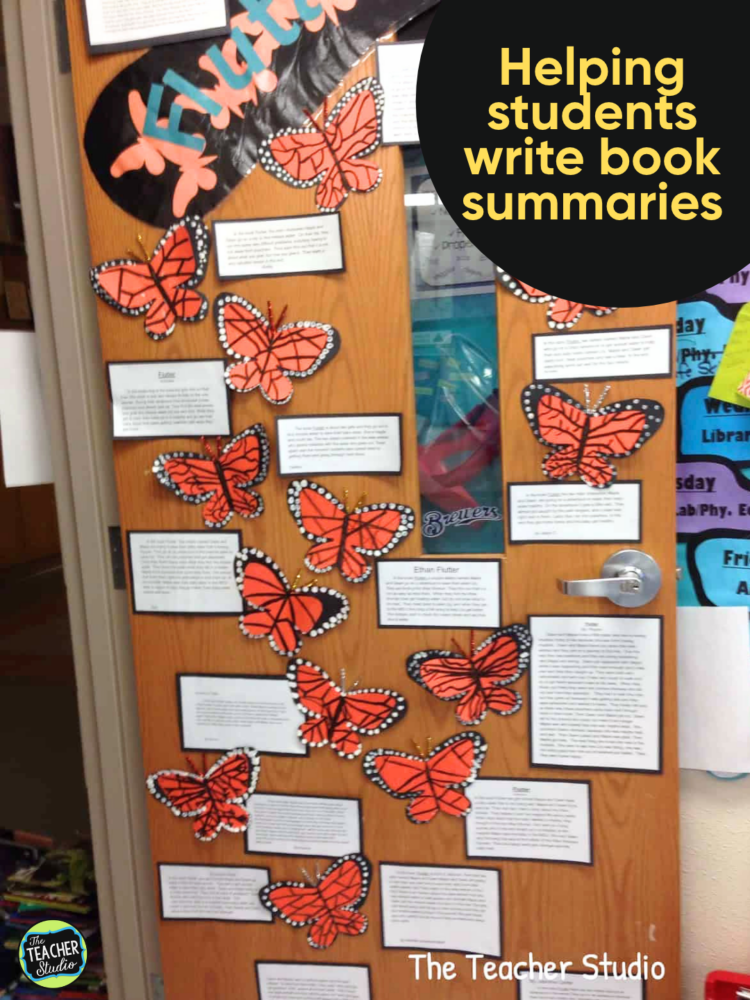
We printed the summaries and hung them on the wall with our “Flutterfly” art. Kids love seeing their writing up, and a display gives the work a real audience. It was a fun way to wrap up a book my students loved so much.
Our “Flutterfly” Display
The art project only took 15-20 minutes total, and my students loved it. It turned our summaries into something students were proud to show off.

Adding the “veins” with a Sharpie

Stapling only the middle to the black background, then adding paint dots with cotton swabs

Letting our wings dry

Our butterflies displayed with the finished summaries
Try It With Your Next Read-Aloud
- Talk before writing. Have groups agree on the “heart” of the book first. It makes the writing much easier.
- Keep it short. A limit of a few sentences pushes students to choose what matters instead of retelling everything.
- Make it something to share. A simple art display gives students a real audience and a reason to revise.
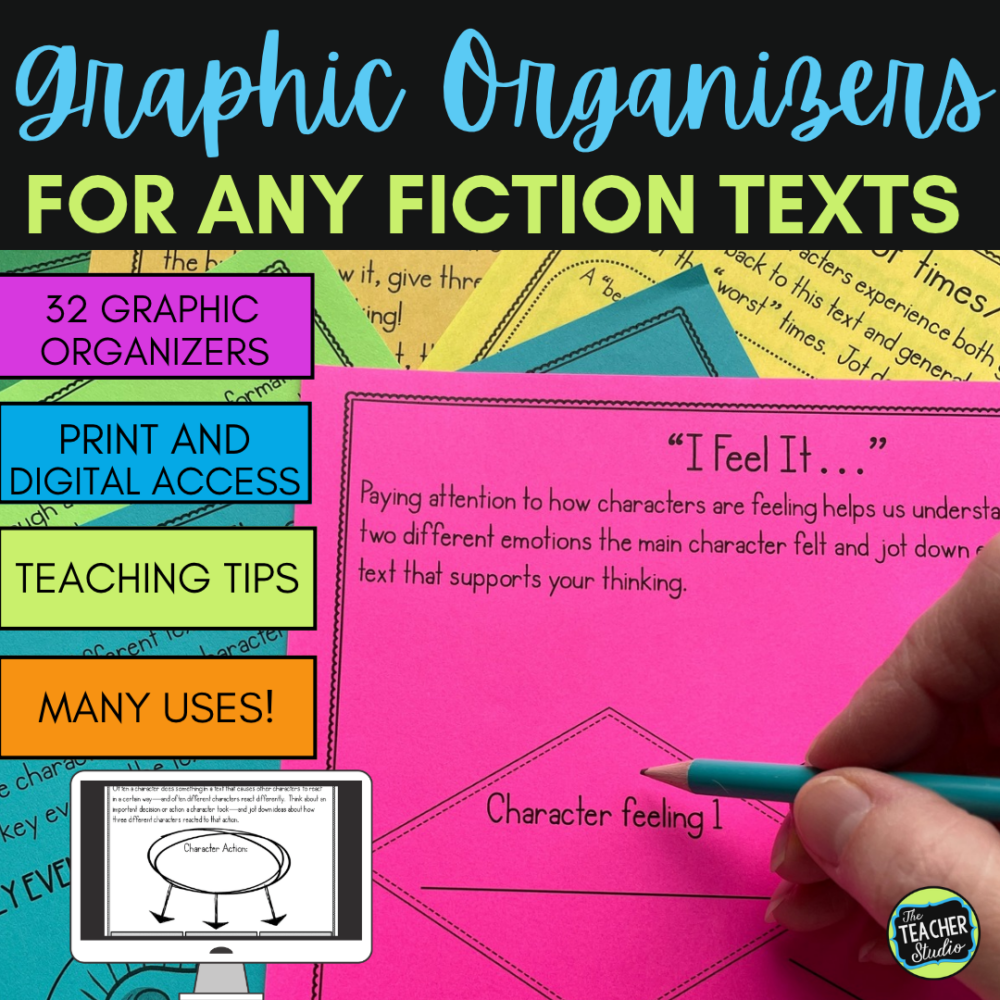
Interested in other “after you read” activities? Check out this set of graphic organizers that help YOU help your students reflect on and write about fiction texts.
Do you follow me on social media yet? I'd love to connect there!
Facebook
TikTok
Instagram
Youtube
Or sign up for my email list RIGHT HERE for freebies, teaching tips, and more!