Give students a number line with only 1/2 marked and ask them to label it. In my class, every group put 0 at the far left end and 1 the same distance to the right. Then show them a line where 0 isn’t at the end, or one with just 1/2 and 5/8, and watch them realize a number line goes on forever and the spacing depends on the numbers you mark.
Hello everyone, and thanks for coming back for more fraction adventures! Today’s post is really a combination of classroom “happenings.” I don’t know if you’ve noticed, but sometimes something I plan as a quick warm-up turns into something just a teeeeeny bit more involved.
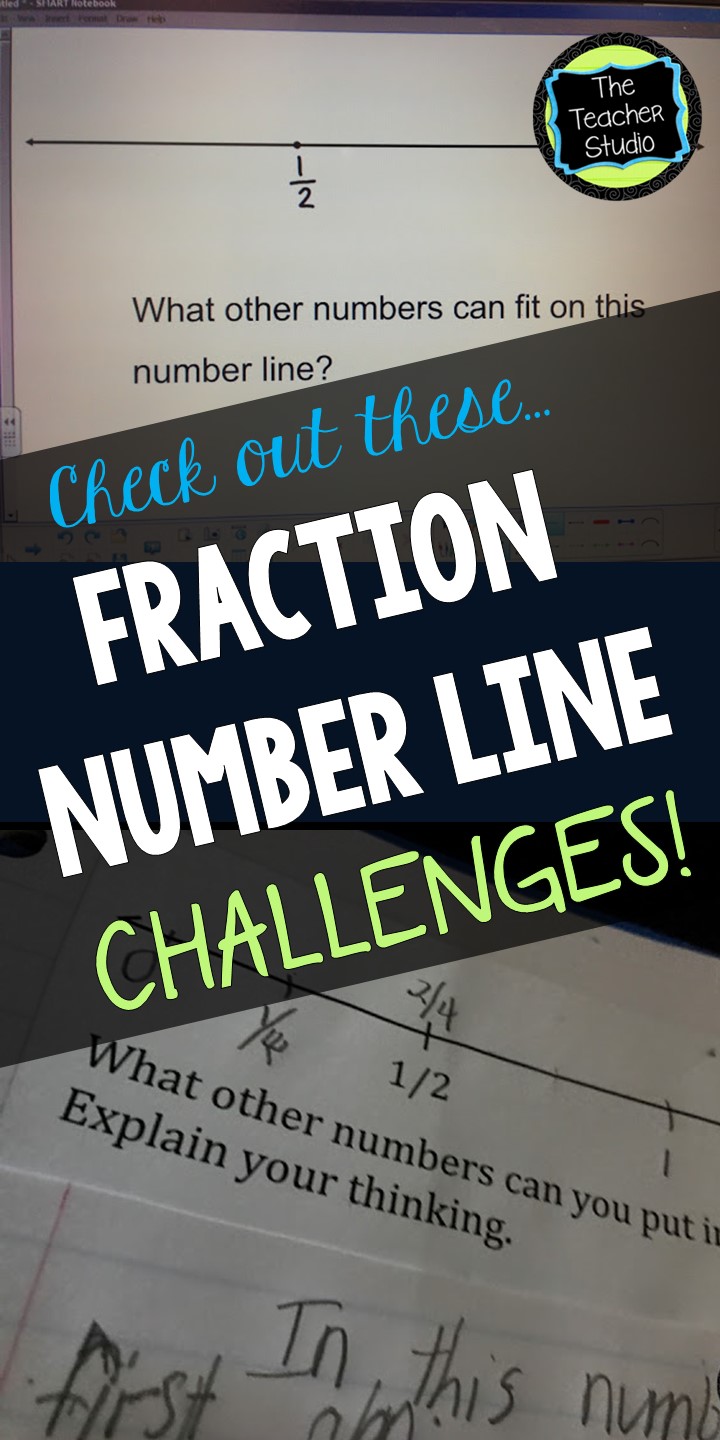
The warm-up: a number line with only 1/2
That was the case with my warm-up the other day. It seemed simple enough. Note: I purposely did NOT put any points or any other references on the number line. See below . . .
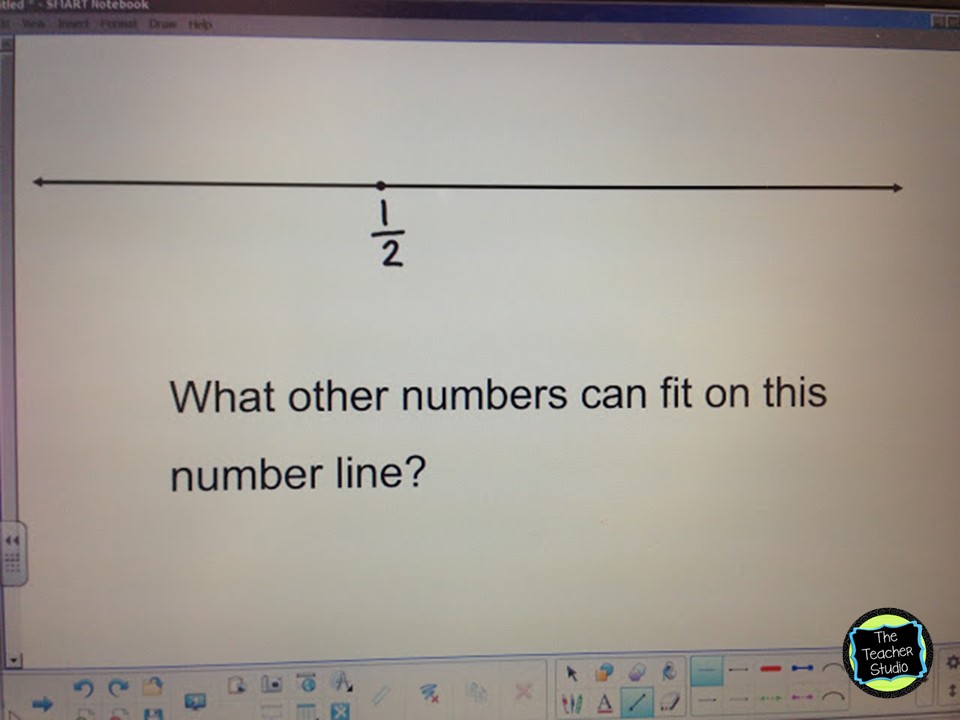
Now, if you’ve been reading Days 1-10, you know that I like to torture my students with odd questions, bizarre situations, and obtuse tasks. Watching them struggle makes me beam with pride. Seriously! My students will take on a task like this with no questions asked anymore. I did get a few comments . . .
“Is this one of those ‘There are lots of right answers’ types of problems?”
“Can we move the 1/2 to ‘where it’s supposed to be’?” (I loved that one. I shrugged and informed them that it IS where it’s supposed to be. Thank. You. Very. Much.)
“Do they have to be fraction numbers or can they be ‘real’ numbers?” (Love how fractions are fake numbers.)
So off they went to their teams. I asked them to work for 10 minutes or so and come up with ONE united solution. They put their heads together, and I sat back and listened to all sorts of amazing discussions. There was lots of pencil tapping, fingers used as “spacing guides,” and even a few rulers pulled out to try to prove points.
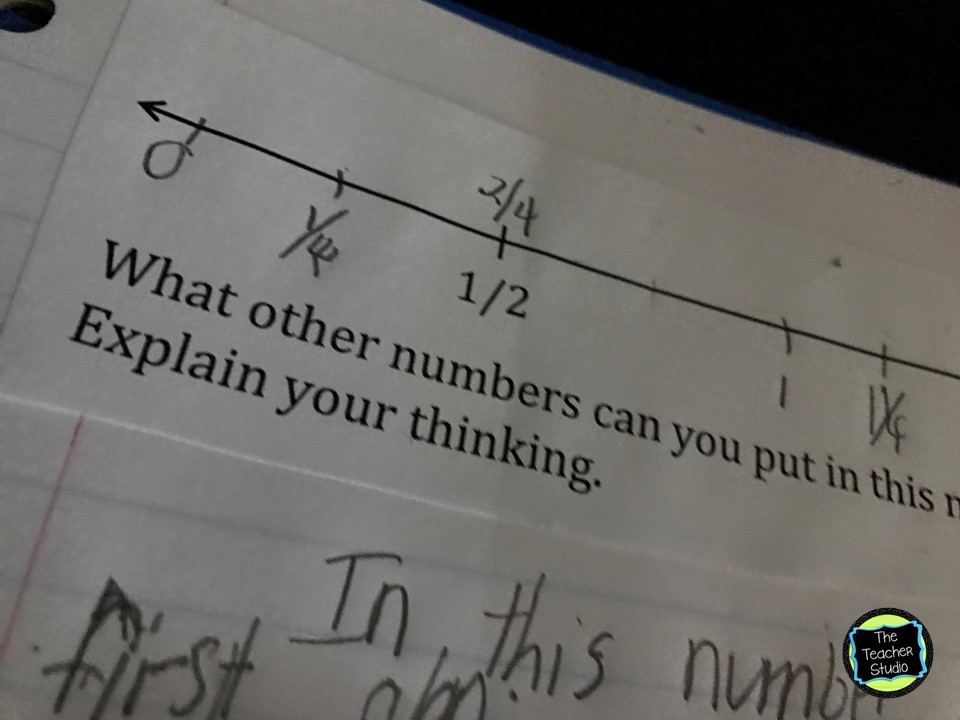
What every group did
After they had worked, I had all of the groups come up to the Smartboard and share their ideas . . .
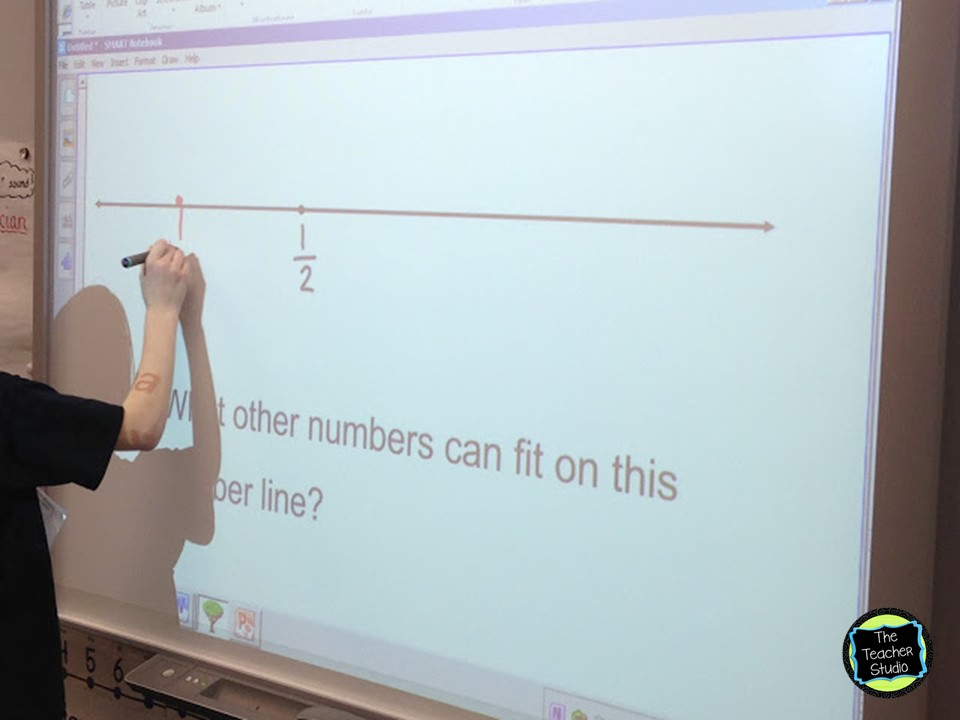
We talked about how similar and different the solutions were. To be honest, I was surprised at how uniform they were. Pretty much all groups plopped a “0” and a “1” on either side of the 1/2, with the 0 as far to the left as they could go. Different groups then did varying degrees of division. Some counted 0, 1/4, 1/2, 3/4, and so on. Others put in eighths, and a few added “estimated” fractions like 1/3. But every single group put the zero “as far over as they could.” They were all very insistent that there be EQUAL spacing between the 0, the 1/2, and their 1. Most groups also had room to add 1 1/2. I was intrigued.
My solution: where’s the zero?
I was still surprised that no one really thought outside the box, so I asked if they wanted to see MY solution. They couldn’t believe it because, of course, I NEVER show them how I would do it. You could just tell they were thinking, “What is she DOING?” Always keep them on their toes, that’s what I say. Because I was at the Smartboard, I have no photos, so here is my recreation of my first attempt:
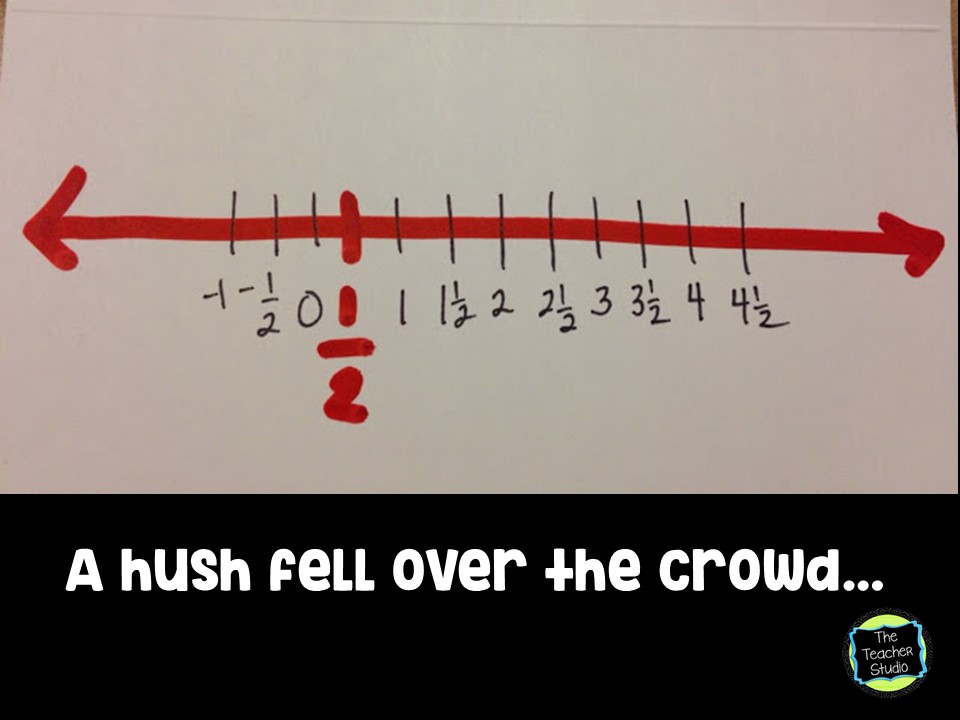
I threw this bad boy up there, and the students were silent. Someone finally chimed in and said, “You didn’t fill up the line.” Someone else said, “Why didn’t you put the zero at the end?” I spoke nary a word. I waited. The kids complained. They talked. Finally I heard,
“Wait, guys. The number line has arrows on the end. It goes on forever in both directions. There isn’t an end.”
Are these not your favorite moments? Those unplanned, unscripted, “I don’t know where this is going and it’s a little scary for me as a teacher” moments? That comment was the catalyst for the next part of the discussion, where we talked about spacing on a number line, equal parts, and so on.
Round two: just 1/2 and 5/8
Not being able to leave well enough alone, I then threw this one out there:
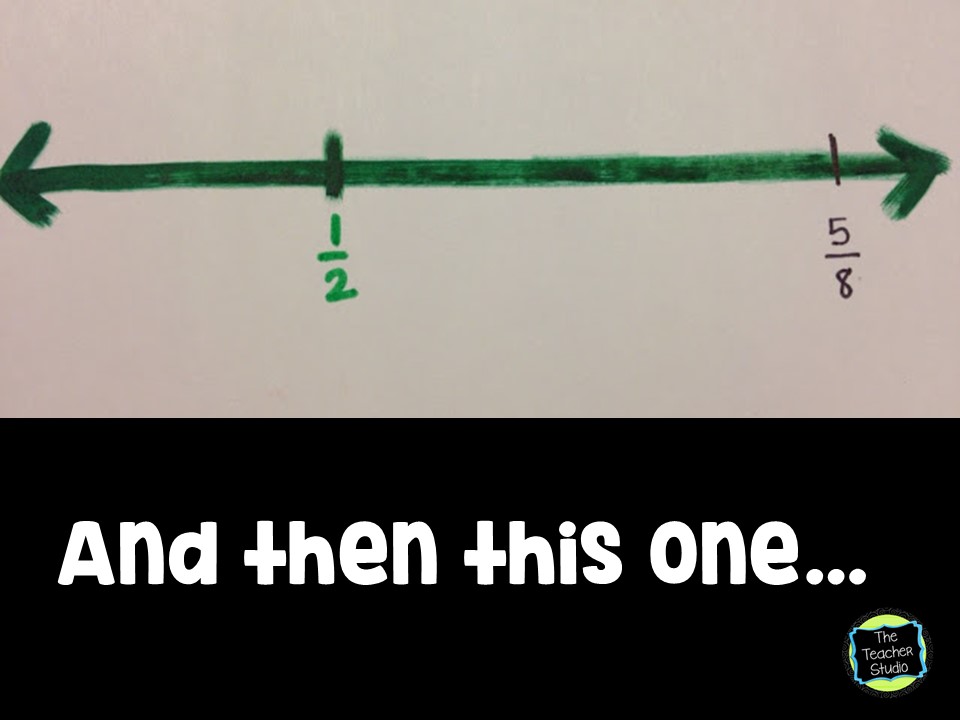
Now this one really irritated them.
“That’s IT? That’s ALL you are putting on it?”
Again, I shrugged. I sent them back to their teams to find other numbers that would work on MY number line. I only gave them a little while to work, but when I started hearing things like . . .
“We need to find other fractions that are equivalent to 1/2.”
and
“There isn’t much space between 1/2 and 5/8.”
I knew we were making progress. So step outside the box with YOUR little people. Look at things a new way. Give them LESS information and see what they can figure out. The world’s problems aren’t going to be solved by people who can pick from among four bubbles, folks. We must be helping them construct meaning.
Try it in your class
- Draw a number line with arrows on both ends and mark only 1/2. Ask teams to agree on ONE way to label it.
- Share solutions and notice where every group put 0.
- Show a version where 0 is not at the end. Wait. Let students talk until someone brings up the arrows.
- Then mark only 1/2 and 5/8 and ask: what other numbers belong on this line, and where?
- Listen for equivalent fractions and the size of the space between 1/2 and 5/8.
See what came next in Day 12: Equivalent Fractions Review with Rotating Posters. For more on number lines, see Fraction Number Lines, Number Sense, and Math Discourse.

Want the whole fraction sequence?
This lesson is part of my fraction unit for grades 3 and 4. Hundreds of teachers have now used it to change the way they teach fractions! Click the image below to take a look.

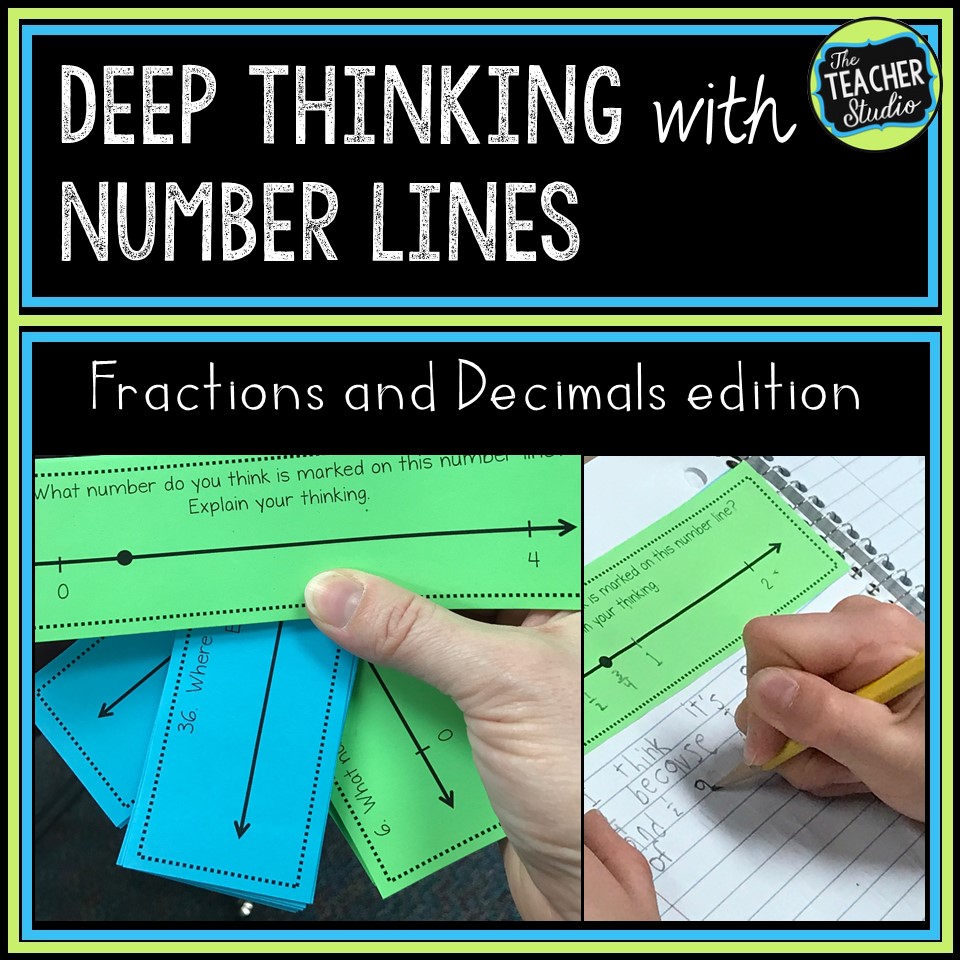
Want more help with number lines? My fraction and decimal number lines resource builds number sense with both.
Want even more? The fraction bundle has 12 of my fraction resources in one place, including the unit and the number line work.

Previous in the series: Fractions Day 10: Equivalent Fractions Stations
Next in the series: Fractions Day 12: Equivalent Fractions Review with Rotating Posters
Do you follow me on social media yet? I'd love to connect there!
Facebook
TikTok
Instagram
Youtube
Or sign up for my email list RIGHT HERE for freebies, teaching tips, and more!