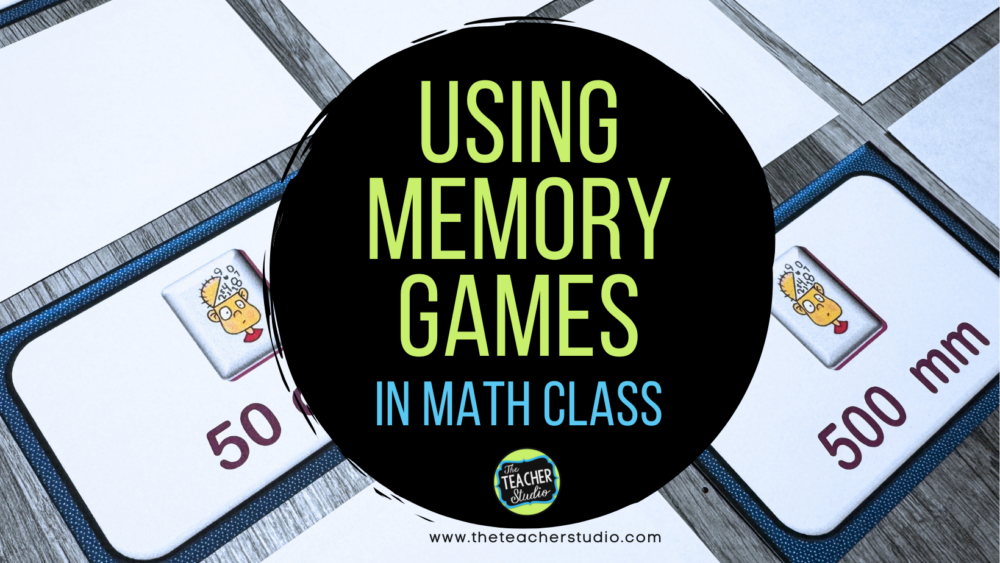
Memory games have a reputation as a primary-grade activity. Flip two cards, find a match, add them to your pile. But with the right content, memory games are one of the most useful tools you can hand a group of 3rd, 4th, or 5th graders. They’re low-prep, kids actually want to play them, and they sneak in a surprising amount of thinking.
When I was teaching, memory-style games were a staple in my math workshop. Here’s why I kept coming back to them, and how to make them work for “big kids.”
What Are the Benefits of Memory Games for Kids?
They build working memory
Remembering where a card was three turns ago is a real mental workout. Students hold information in their heads, update it as cards get flipped, and use it to make a decision. That’s the same skill students lean on when they keep track of the steps in a multistep problem.
They build focus
A memory game only works if you pay attention to everyone’s turn, not just your own. I watched students who had a hard time sticking with a worksheet lock in on a game for twenty minutes.
They give repeated practice without the boredom
In a single round, students see the same math over and over. Every flipped card is another quick look at a fraction, a number, or a model. That kind of repetition builds fluency, and kids don’t experience it as practice.
They get kids talking about math
This is my favorite benefit. When the cards show math instead of pictures, students have to decide whether two cards really match. That leads to real conversations like “Wait, is 2/4 the same as 1/2?” and “Prove it.” Some of the best math talk I heard all year happened at a game table.
They build social skills
Taking turns, winning and losing gracefully, and checking a partner’s match without starting an argument are all skills upper elementary students are still working on. Games give them low-stakes practice.
If you want more on why games deserve a spot in your math block, I wrote about that here: [LINK: https://theteacherstudio.com/playing-math-gamesthey-arent-just-for/]
Fraction Flip: A Fraction Memory Game Students Love
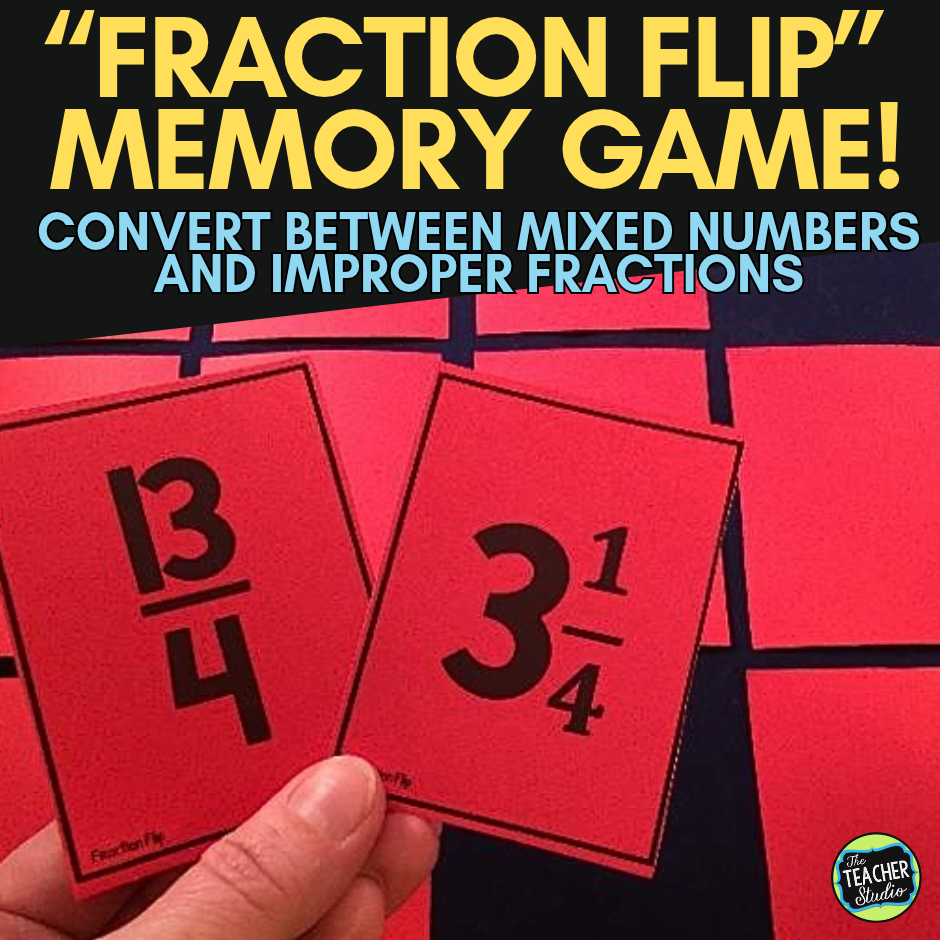
Fractions are where I saw memory games pay off the most. Students need lots of time looking at fractions in different forms before equivalence starts to feel natural, and Fraction Flip gives them exactly that.
Students match improper fractions to mixed numbers. Because the cards show fractions in different ways, students can’t just match what looks the same. They have to think about whether two cards really show the same amount, and that’s where the learning happens.
It works well as a math center, a small group warm-up, or an early finisher choice. It’s also an easy way to keep fractions fresh after your unit ends.
Tips for Using Memory Games in Upper Elementary
Make students prove the match. Before a player keeps a pair, they explain why the cards match. If the group disagrees, they work it out together.
Start face up. For the first round, lay all the cards face up and have students sort them into matches. Then flip them over and play. This takes the pressure off students who are still learning the content.
Adjust the number of cards. Use fewer cards for students who need support and the full set for students ready for a challenge.
Play in teams. Two students sharing a turn means twice the math talk.
Let students make their own. Once they know the format, have students create a set of cards for a skill you’re reviewing. Writing the matches is a great check for understanding.
Want More of a Challenge? Try Three-Card Matches
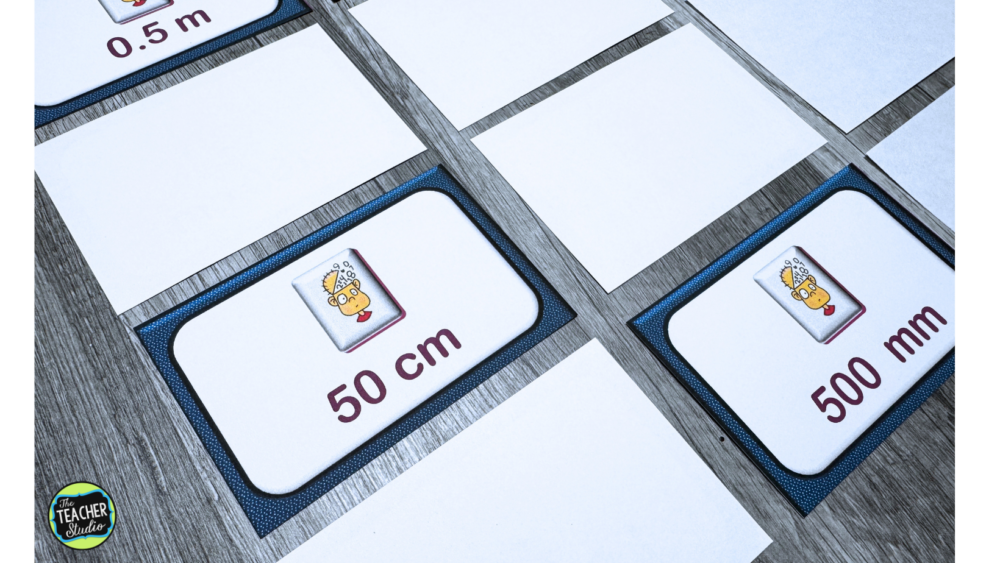
Years ago I created a series of memory games called Trilogy, where students look for three matching cards instead of two. Students groan when two cards match and the third doesn’t, and they argue (productively) about whether a set really counts. There are editions for place value, equivalent fractions, metric conversions, adjectives, verbs, and more if you want to try the three-card twist!
More Math Games for Grades 3 and 4
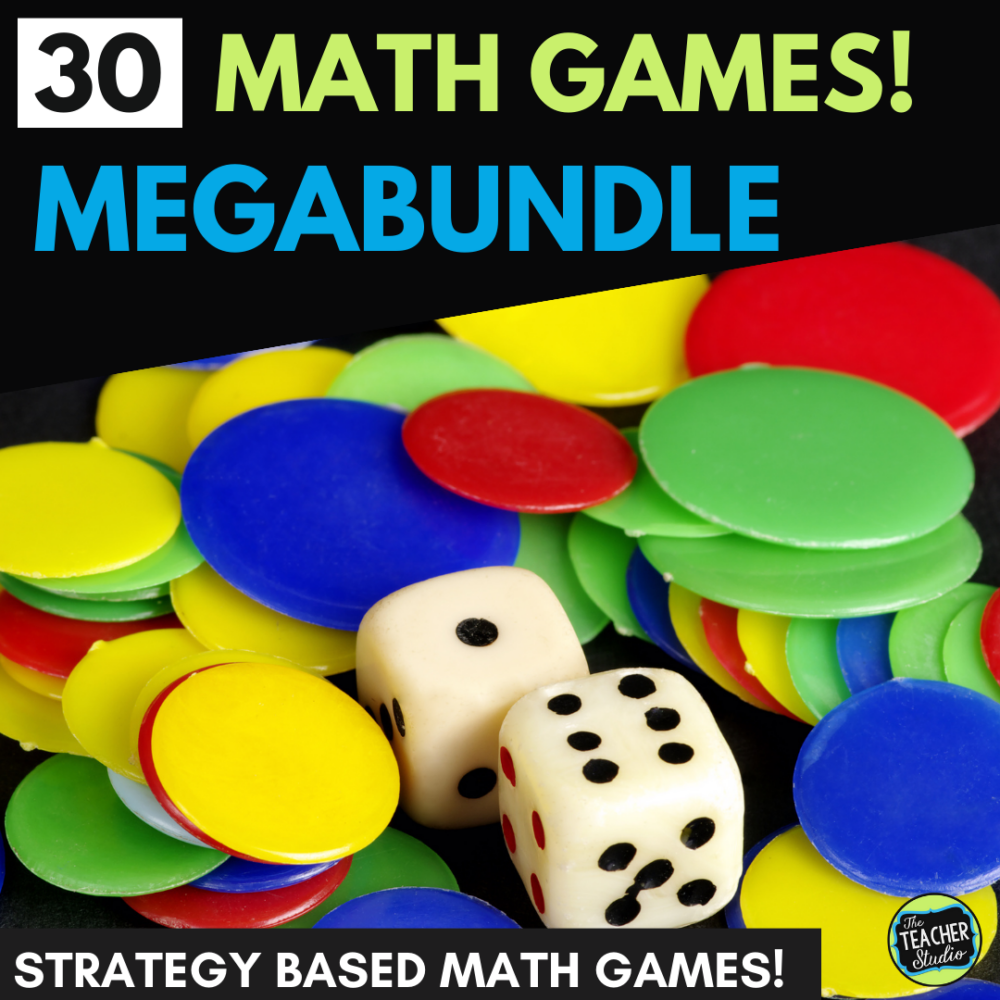
Memory games are just one kind of game that works well with upper elementary students. If you want a full collection ready to go, my 30 Math Games for Math Fluency bundle covers 3rd and 4th grade standards and works for centers, intervention groups, or whole class. They’re low prep, and they give students meaningful practice without another worksheet.
Math games don’t have to be “just for fun” to be fun. With the right content, a simple memory game can build focus, fluency, and some of the best math conversations you’ll hear all week.

Do you follow me on social media yet? I'd love to connect there!
Facebook
TikTok
Instagram
Youtube
Or sign up for my email list RIGHT HERE for freebies, teaching tips, and more!