Here’s something I noticed year after year in the classroom. Almost every math struggle I saw eventually traced back to the same place. Not fractions. Not multiplication facts. Place value. (OK, math confidence is another place where the struggle is real, but that’s another post!)  Kids can look solid on paper. They can tell you which digit sits in the hundreds place. They can fill in a worksheet correctly. But the moment they need to actually reason with numbers, the cracks show up. And by upper elementary, those cracks show up everywhere: rounding, multi-digit operations, word problems that ask kids to reason about size and scale.
If the foundation is shaky, everything stacked on top of it wobbles too. So let’s talk about several specific misconceptions I saw over and over, especially in grades 3 through 5, and what they actually look like in a classroom.
1. Naming a Digit’s Place Isn’t the Same as Reasoning With It
Ask a student what place the 3 is in inside the number 3,482, and most will tell you: hundreds. Ask that same student what 30 tens equal, and you’ll often get a blank stare, or a guess.
This illustrates the gap between memorized vocabulary and actual number sense. Students learn to label digits long before they learn to flexibly regroup and rename quantities, and a lot of instruction stops at the labeling stage because it’s the part that’s easy to test.
The reasoning part, where a student can move fluidly between 30 tens, 300 ones, and 3 hundreds, takes a lot more hands-on practice to build.
2. Comparing Numbers Strategically
Most students pick up quickly that a four-digit number is bigger than a three-digit number. The trouble starts when two numbers have the same number of digits. Without a reliable strategy for comparing place by place, starting from the left, students guess. They’ll compare the ones digit, or whichever digit catches their eye first, instead of working systematically from the greatest place value down.
This shows up constantly in comparing and ordering tasks, and it quietly undermines rounding later on, since rounding depends on knowing exactly which place value you’re anchoring your decision to.
It’s also part of the reason students sometimes use the wrong digit to identify even and odd numbers. They don’t truly understand what each digit means.
3. Expanded Form Gets Memorized, Not Used
Most students can write 4,000 + 300 + 20 + 5 when you ask them to convert a number into expanded form. Far fewer reach for that structure when they’re actually stuck on a problem, like a multi-digit subtraction problem that requires regrouping, or a rounding task where breaking a number into its parts would make the answer obvious.
Expanded form is a tool, not a worksheet exercise. When it’s only practiced in isolation, students never build the instinct to pull it out when it would actually help them.
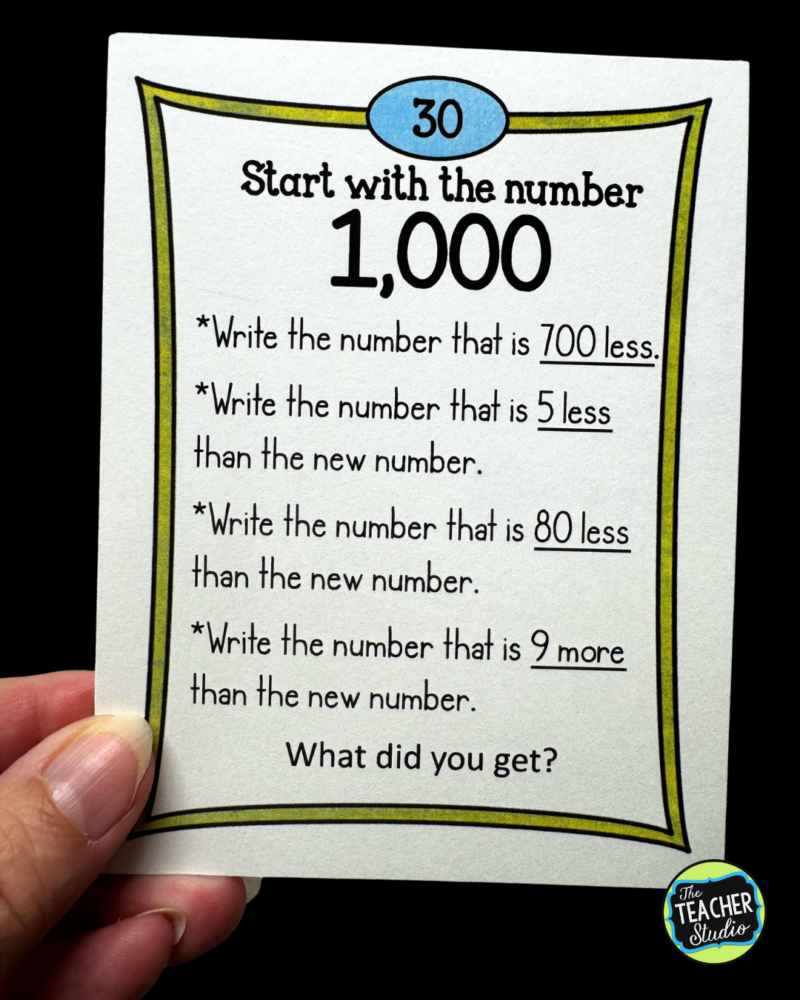
Many students also struggle with the flexibility to manipulate numbers. For example, a student should be able to add 500 to the number 4,274 without doing a written algorithm. Helping students understand how each “place” can change is so important.
4. Ten of One Unit Becomes One of the Next, and Many Students Never Fully Internalize It
This is the quietest misconception on this list, and the one that causes the most damage down the line. Understanding that ten ones become one ten, that ten tens become one hundred, and so on, is the entire logic behind regrouping. It’s also the logic behind rounding, and eventually, decimals.
When students haven’t internalized this idea, they can often still get correct answers by following a memorized procedure. But the moment the numbers get more complex, or the context shifts to something like decimals, the lack of true understanding catches up with them.
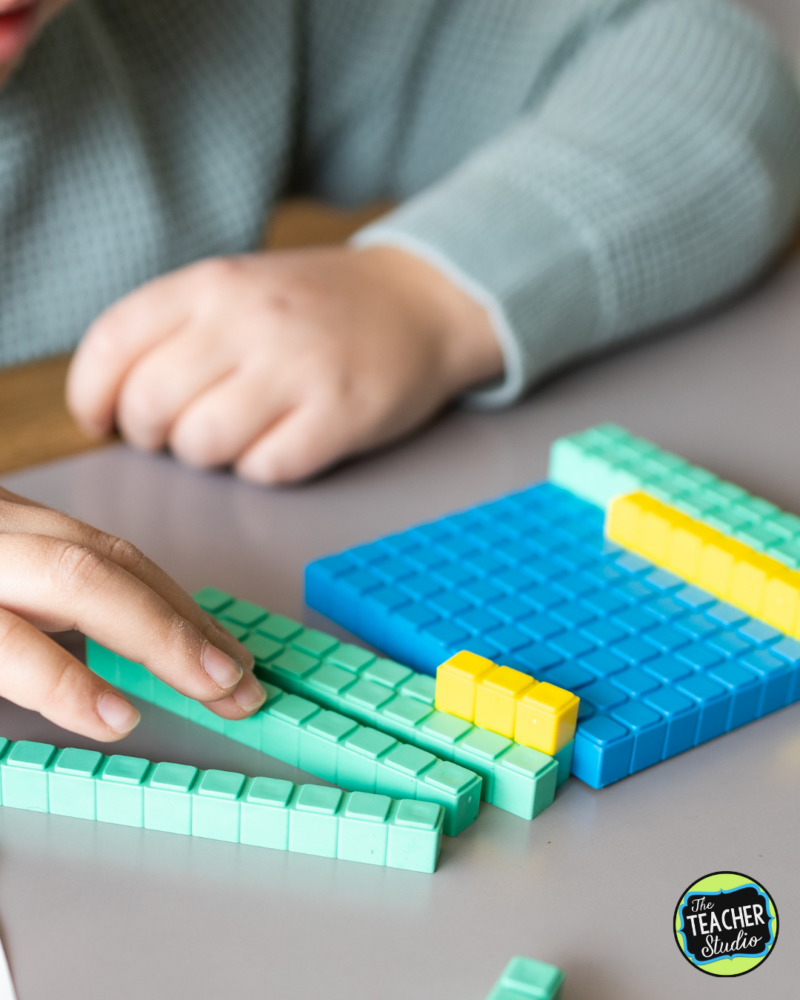
This is the misconception I’d prioritize addressing first, because so much else depends on it. The best way to address it is to go back to concrete models. Students need to SEE and BUILD numbers to make connections and see how our base 10 system works.
Why This Is Worth Addressing Head-On
None of these misconceptions announce themselves as “place value trouble.” They show up disguised as trouble with rounding, trouble with multi-digit operations, trouble with word problems, even trouble with fractions and decimals down the road. If you’re troubleshooting a math struggle in grades 3 through 5 and can’t quite pin down the root cause, place value is worth checking first.
The good news is that this is a very teachable gap. It just needs to be taught through real work with objects, drawings, number lines, and models. More worksheets asking students to identify a digit’s place in isolation won’t build understanding.
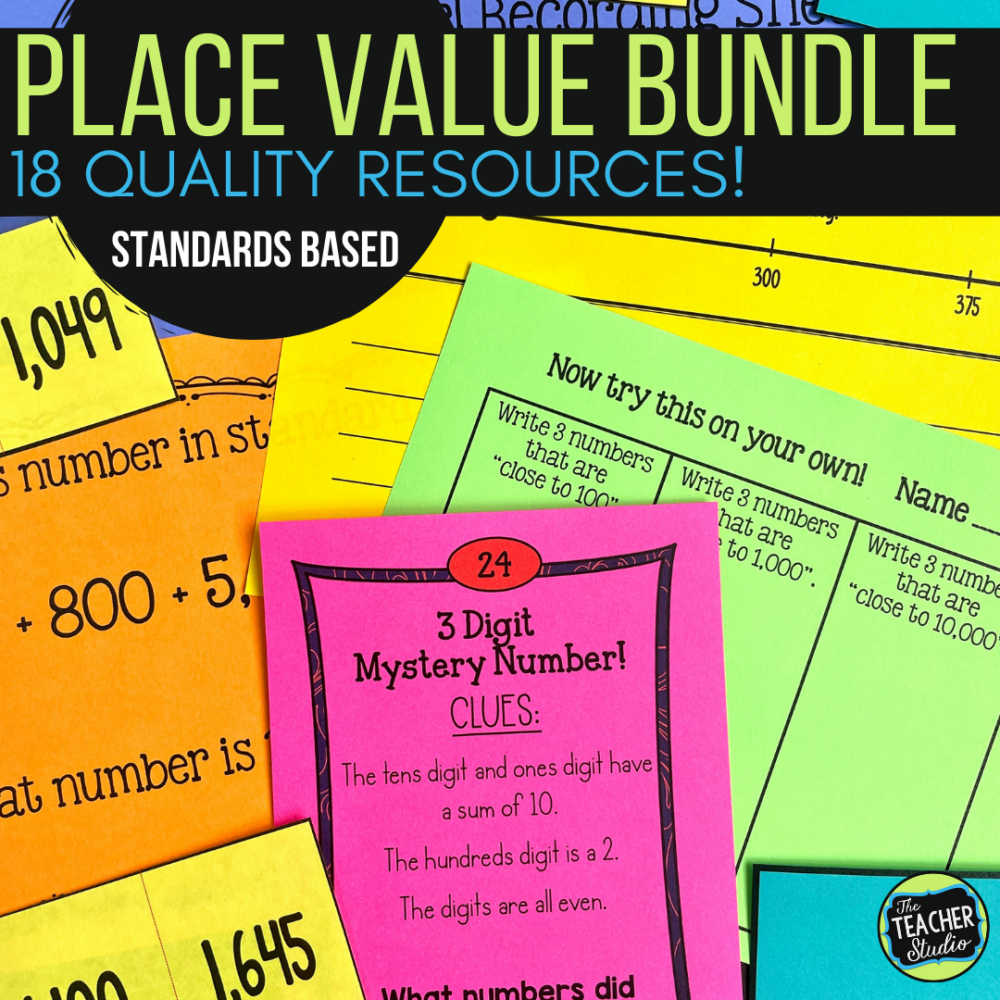
This is exactly why I built my Place Value Activities Bundle, 18 hands-on activities and games across grades 2 through 5 built around comparing and ordering, expanded form, and digit value in ways that ask students to actually reason, not just fill in a blank. If any of the misconceptions above sounded familiar, that’s a good place to start.
Check it out here!
If you are interested in more place value help, check out this post all about using number lines to build number and place value sense.
Do you follow me on social media yet? I’d love to connect there!