A fraction sort asks small groups to sort fraction cards into categories and explain why each card belongs. In this one, trios decided whether each card was an example of 1/2 or a counterexample, wrote on their posters to prove it, and then tagged errors on other groups’ work during a gallery walk. The whole lesson took 25 minutes and was packed with math talk.

Why sorting works in math
One thing that I really like to work on with my students is organizing their learning in different ways. One method I have found to be very successful is to ask students to take work samples or problem types and sort them into categories. People who use Words Their Way do this all the time with students as they look for sound or letter patterns that help them understand how words are put together.
I find concept sorts particularly useful in math and the content areas as well, and I really believe they help students make connections among ideas and see how things are connected. In fact, two of Marzano’s effective teaching strategies, cooperative learning and identifying similarities and differences, are addressed with this activity. If research has shown solid evidence that categorizing and finding similarities and differences works, I’m all for it!
How I set up a fraction sort
Here is how I tend to use these sorts, although please know that there is no RIGHT way! Get creative and let the students guide you as you go. Here is one example of a sort I did with my students.
I started by splitting my class into groups of 3. (I like trios for lots of reasons: they allow for better dialogue, they help strugglers, and they leave room for one extra person in case a third person gets pulled out of the group or has to leave for any reason!) For this sort, I gave each group a small piece of bulletin board paper to do their sort on. They grabbed their sort cards, cut, and started to organize them!
As my students sorted, I simply walked around and eavesdropped! It was a great time to listen for math language, to listen for any misconceptions, and to see who was feeling confident and who was not.


Sit back and “kid watch”
Students begin to question each other, ask questions of each other, and help one another come to higher levels of understanding. My role is simply to be an observer. I really don’t get involved at this point…even if I see errors. Trust me on this!

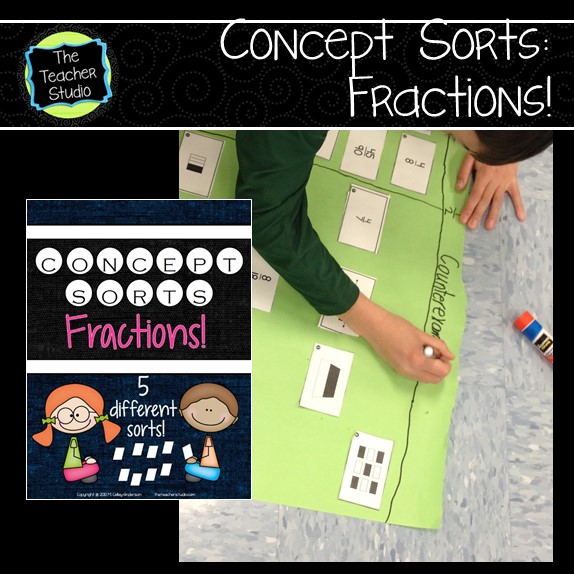
This sort was an example/counterexample sort. I wanted the students to decide if each fraction card was an “example” of 1/2 or a “counterexample” of 1/2. This group was getting their T-chart all set up.

Now…it would be plenty easy to have the students stop at this point, but I am working hard with mine to get them to use their writing skills in math and to work on that “critiquing reasoning” standard. So I had my students actually write on their posters to explain why all their “counterexamples” were NOT 1/2!
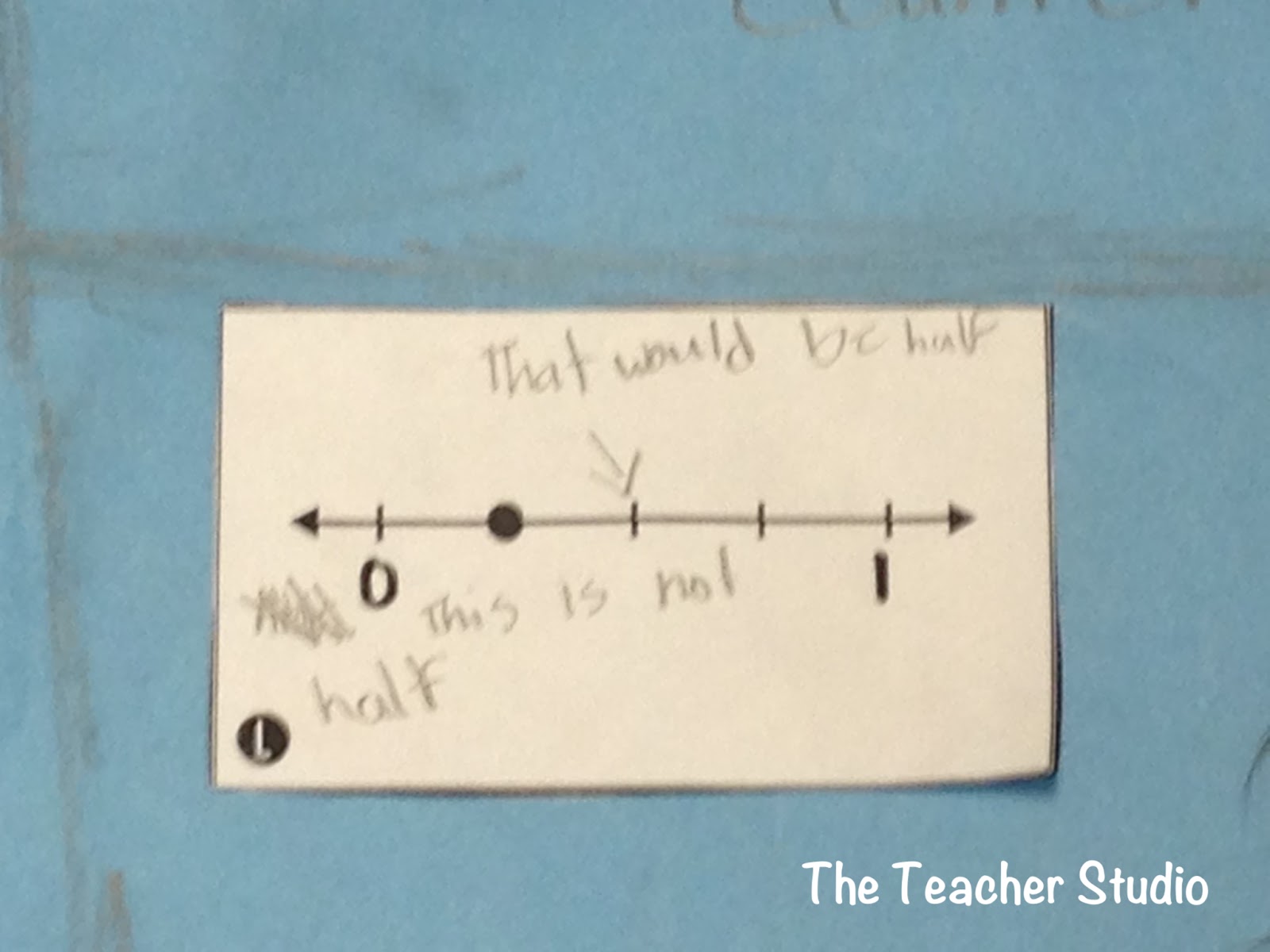
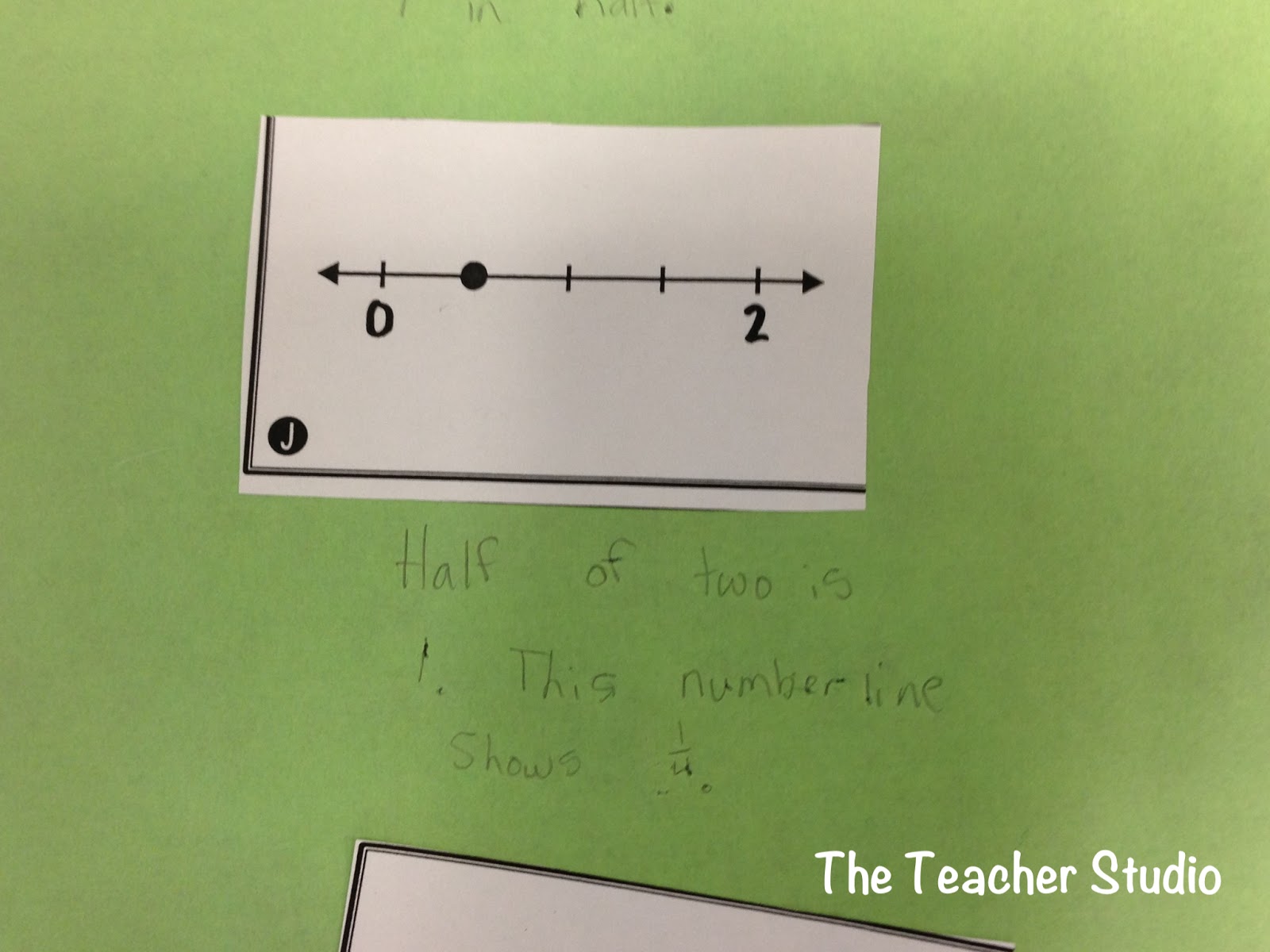
I gave the students a total of 15 minutes to do this job, and there were a few groups that did not get every card sorted. That’s okay. If I gave some groups 45 minutes, they may not have finished! I like to keep things moving. I even had a visual timer up on my Smartboard so they knew how much time they had left.
The gallery walk: tagging errors
After the time was up, I continued the activity with a gallery walk. Although actually DOING the sort is a valuable activity, gallery walks can add a whole new level of critique to the lesson! Each trio took a sticky note and cut it into three “tags.” They were allowed to “tag” up to three spots on other groups’ papers where they felt an error was made. Here’s what it looked like!
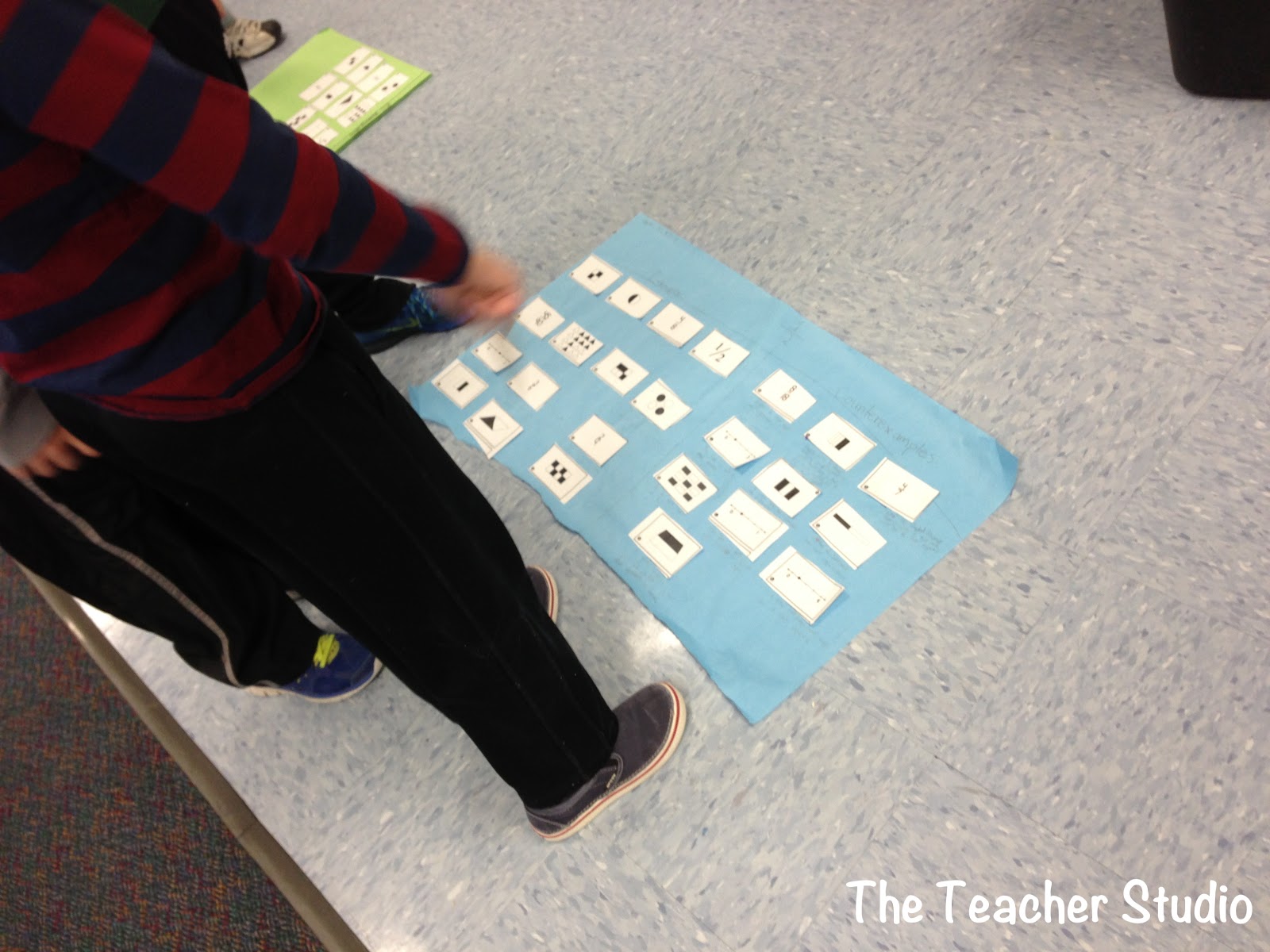
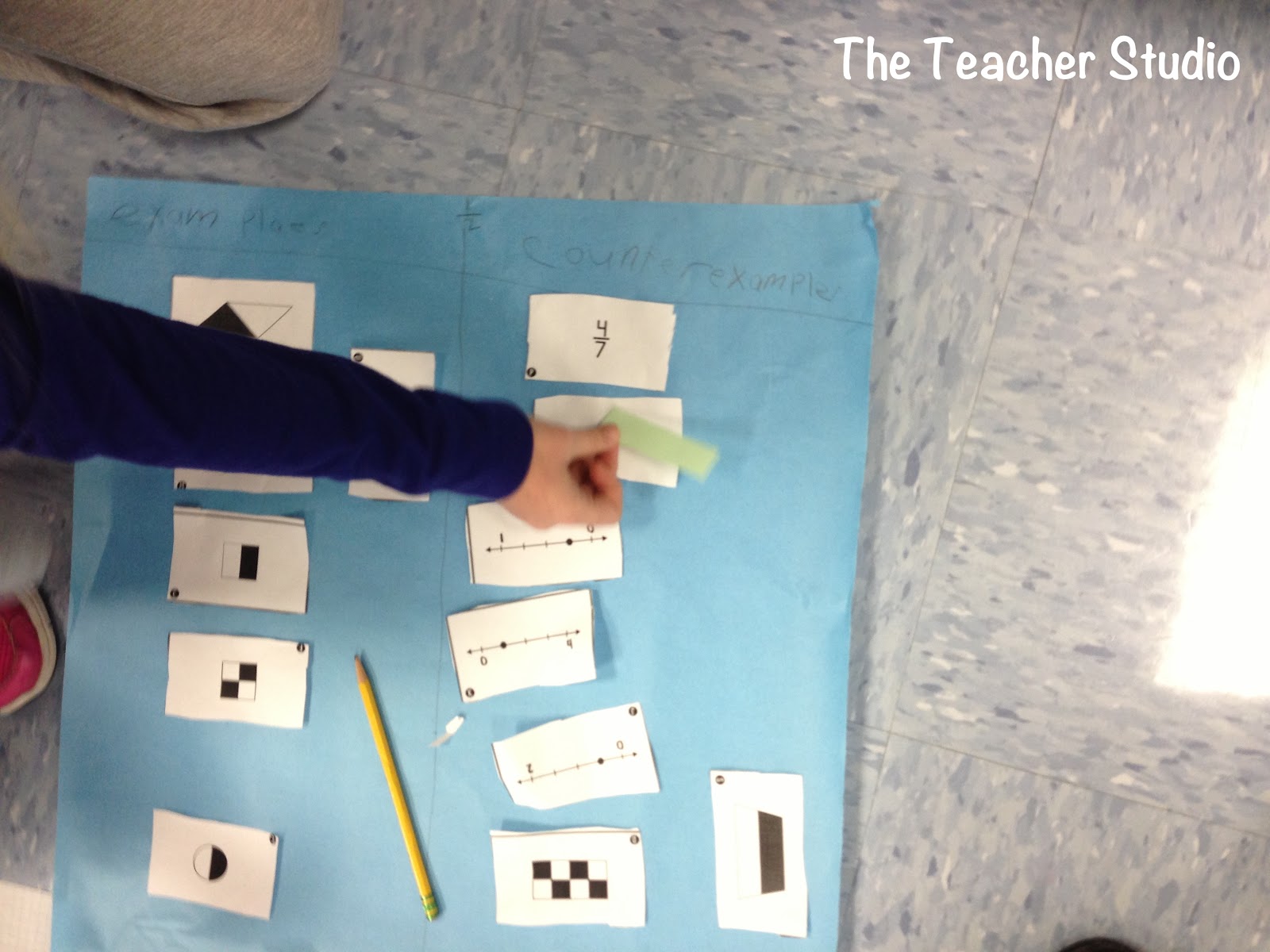
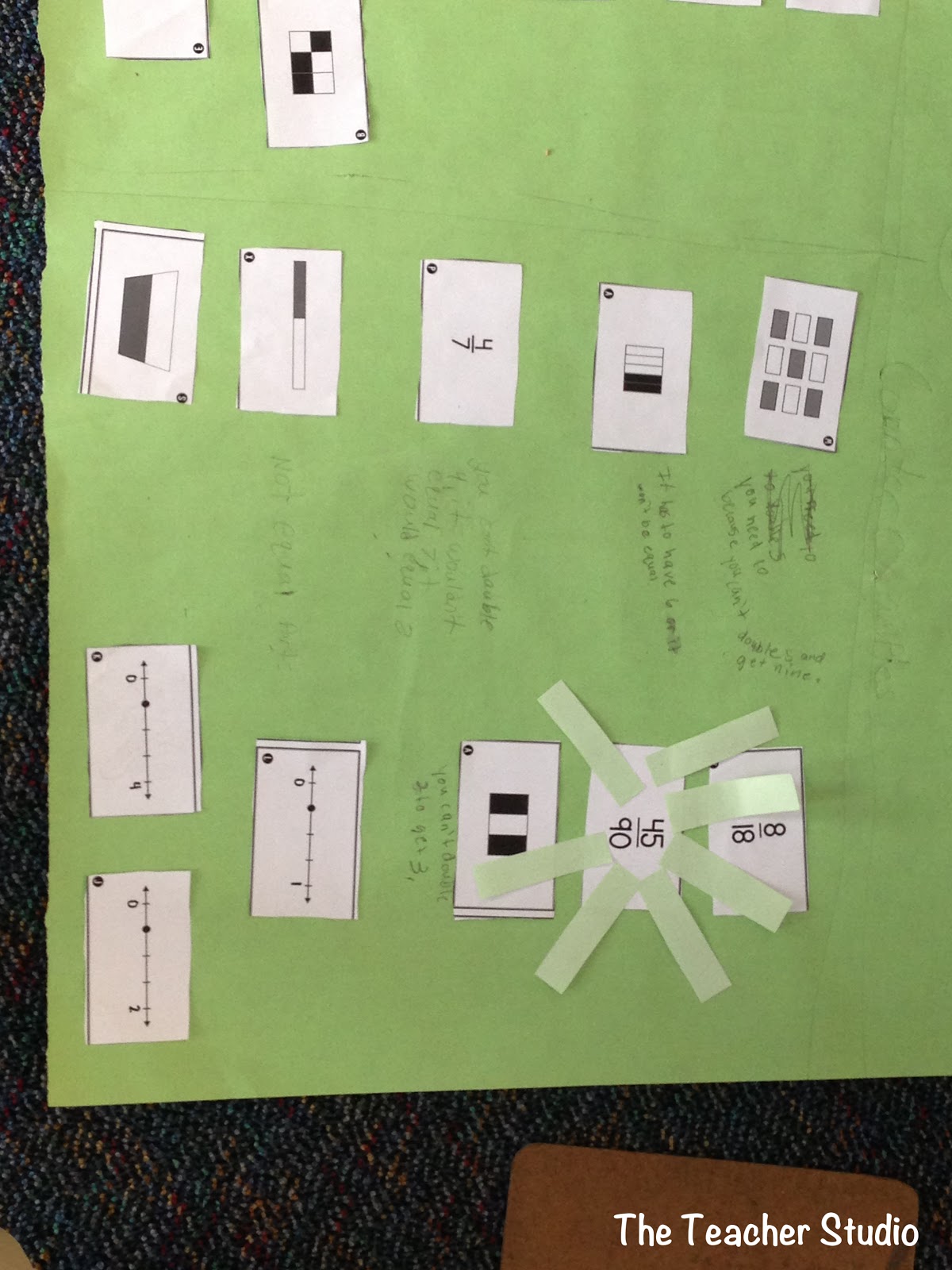
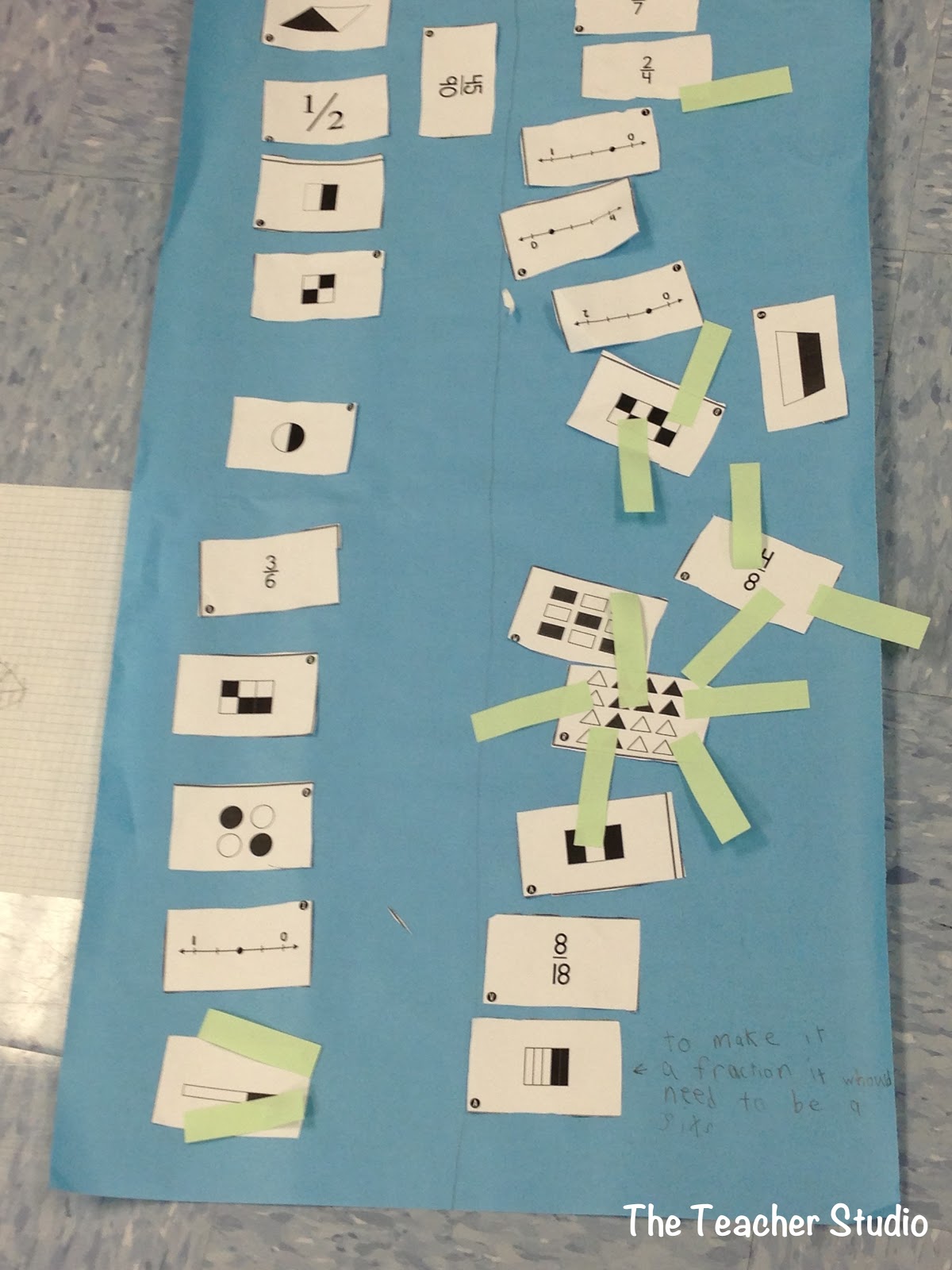
Finished? Not yet! Each group then went back to their “home base” and looked at the results. They discussed any “flagged” items, and we went through some of the most challenging ones as a class. The entire activity took us 25 minutes from start to finish!
Try it in your class
- Put students in trios with a piece of bulletin board paper and a set of sort cards.
- Set a visual timer for about 15 minutes.
- Stay out of it while they sort. Listen for math language and misconceptions.
- Have groups write on their poster to explain why each counterexample does not fit.
- Gallery walk: each trio gets three sticky note “tags” to flag possible errors on other posters.
- Groups review their tags, then discuss the toughest cards as a class.
Want to see another way I use this same 1/2 sort? Read Common Fraction Misconceptions and How to Uncover Them and Construct Viable Arguments and Critique Reasoning: A Math Sort.
Ready to give it a try? This sort is one of FIVE fraction sorts in my fraction concept sorts resource, including the one pictured above.
Want to try a sort for free? Check out this algebraic thinking sort!

Want the whole fraction sequence?
My fraction unit for grades 3 and 4 is a best seller. Click the image below to take a look.

Want even more? The fraction bundle has 12 of my fraction resources in one place.

Keep reading:
Fractional Reasoning: A Comparing to 1/2 Concept Sort
Using Math Sorts to Encourage Productive Struggle
Fraction Examples and Counterexamples: A Poster Activity
Do you follow me on social media yet? I'd love to connect there!
Facebook
TikTok
Instagram
Youtube
Or sign up for my email list RIGHT HERE for freebies, teaching tips, and more!